The Laysan Albatross or Moli is truly an amazing bird. Well actually, I find all birds pretty cool, but the albatross I find particularly intriguing. Here at Ali’i Kai, I’m seeing these beautiful birds fly by every day as they fish on the water and catch the wind currents coming up the cliffs. They are basically built like sailplanes and spend most of their lives, for years at a time, 1,600 miles away on the open ocean in the North Pacific. The Princeville and Kilauea areas of Kauai are particularly blessed because the Laysan Albatross return each year to nest above the cliffs. This gives people like me the opportunity to see them up close as they sit on their eggs and tend to their chicks.
Photographing these birds in flight is not an easy task but I have managed to get a few good shots that thrilled me. At Kilauea Lighthouse/National Wildlife Refuge these birds as well as the Red-footed Booby and Great Frigatebird fly by quickly, riding the air currents rising from the ocean. My friend Jody who works at the Refuge showed me the best spot to stand to get a good shot at catching them as they soar by.
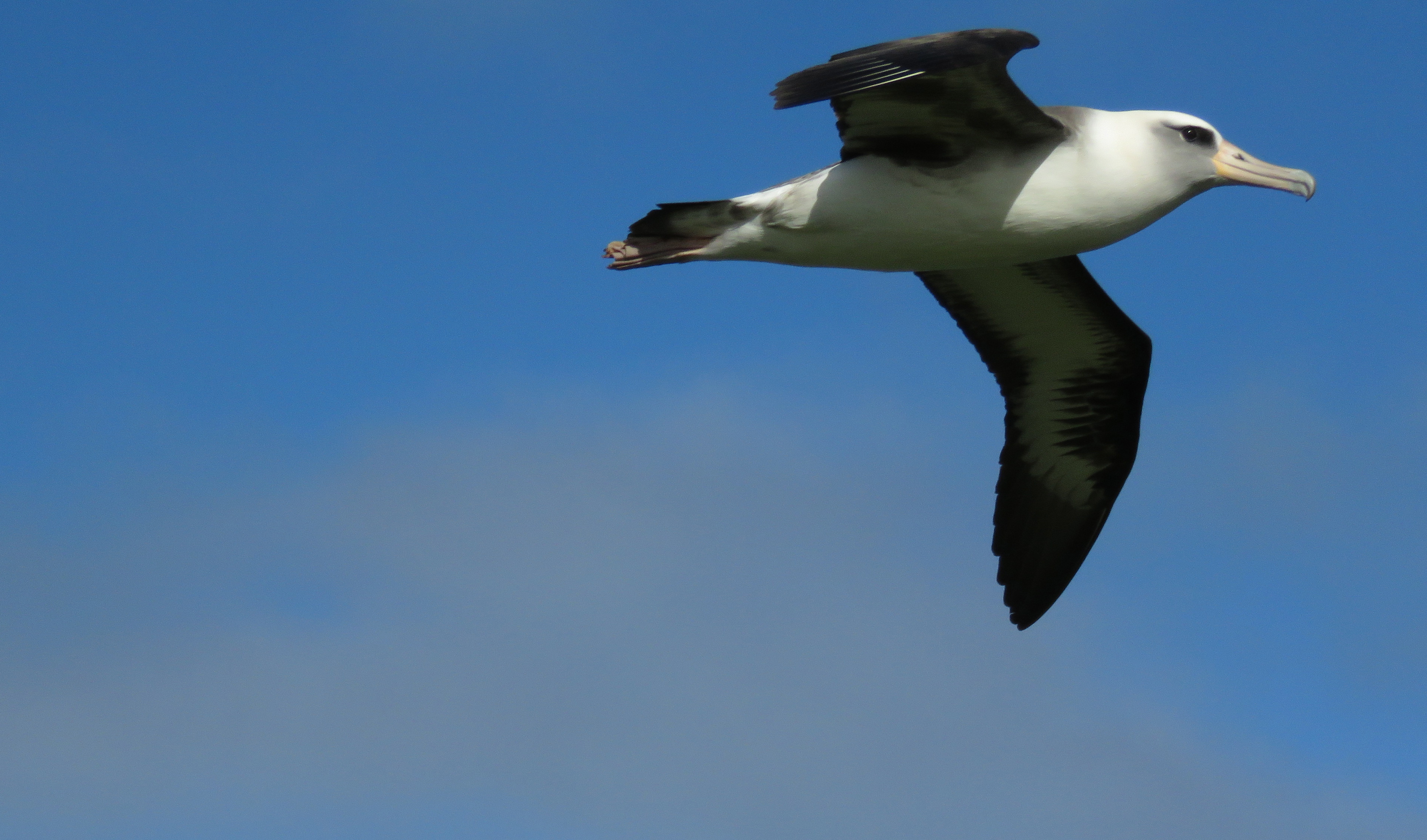
Laysan Albatross, Kilauea National Wildlife Refuge, Kauai
The Laysan’s body is 31-32” long and its wingspan is 78-80” – that’s over 6 ½ feet! Long, thin and pointed, their wings are built for seemingly effortless soaring over long distances. When you see them from a distance, what you notice is their large white body and dark wings. These birds feed primarily on cephalopods (mostly squid). On land, the albatross is pretty clumsy and walks with a humorous waddle – sort of like a toddler with a big diaper! Due to the their silly way on land, people used to call them “gooney birds.” Laysan Albatrosses vocalize with a collection of whinnies, wines and moans. They also snap their bills together a fair amount.
Our friend Jody knows a volunteer researcher, Cathy Granholm http://www.albatrossdiary.com who is protecting and recording the behaviors of the albatrosses while they nest and fledge in Princeville. Jody and two of her friends invited Bill and I to join Cathy on Friday as she made her rounds. This was a wonderful opportunity to see these birds up close including chicks that were just a day or two old. Believe it or not, these birds were nesting right in a residential area amidst people’s bushes and on their lawns.

Laysan Albatross, Princeville
The adults arrive in November to start courting and nesting. They lay just one egg, which becomes the center of their lives for 65 days of incubation until the chick hatches – then the real work starts. At first, one parent is always with the chick while the other is finding food. Eventually both parents leave the nest, sometimes for several weeks at a time, in order to find enough food for the growing chick. Cathy estimated that they may go as far as Alaska to get enough food. It takes about 160 days for the juveniles to fledge which happens in July or August. Once the juvenile fledges, it will be out at sea for three years before it returns to its colony. Albatrosses don’t start mating until they are about 7-8 years old. Most albatrosses live to be about 40-60 years old. The oldest living Laysan Albatross is 63 years old and her name is Wisdom.
Cathy has been documenting their activity for 10 years so we learned a lot about them as we walked around her neighborhood meeting these feathered visitors. It turns out there are a lot of misconceptions about these birds. Many of them mate for life but it turns out there is a lot more drama in the albatross world than most people realize. Courtship can be intense, and since there appear to be more females than males, this adds to the albatross soap opera in Princeville each year. Quarrels, divorces, and deaths are common occurrences as well as female-female nesting pairs. When two females get together, they usually each lay an egg and incubate one of them but since it’s rarely fertilized, it never hatches. Cathy told us about this with a bit of sadness in her voice. She knew most of the birds we encountered along the walk either by their names or their ankle tag numbers and had stories – some heartwarming and some sad – about these birds that return year after year.
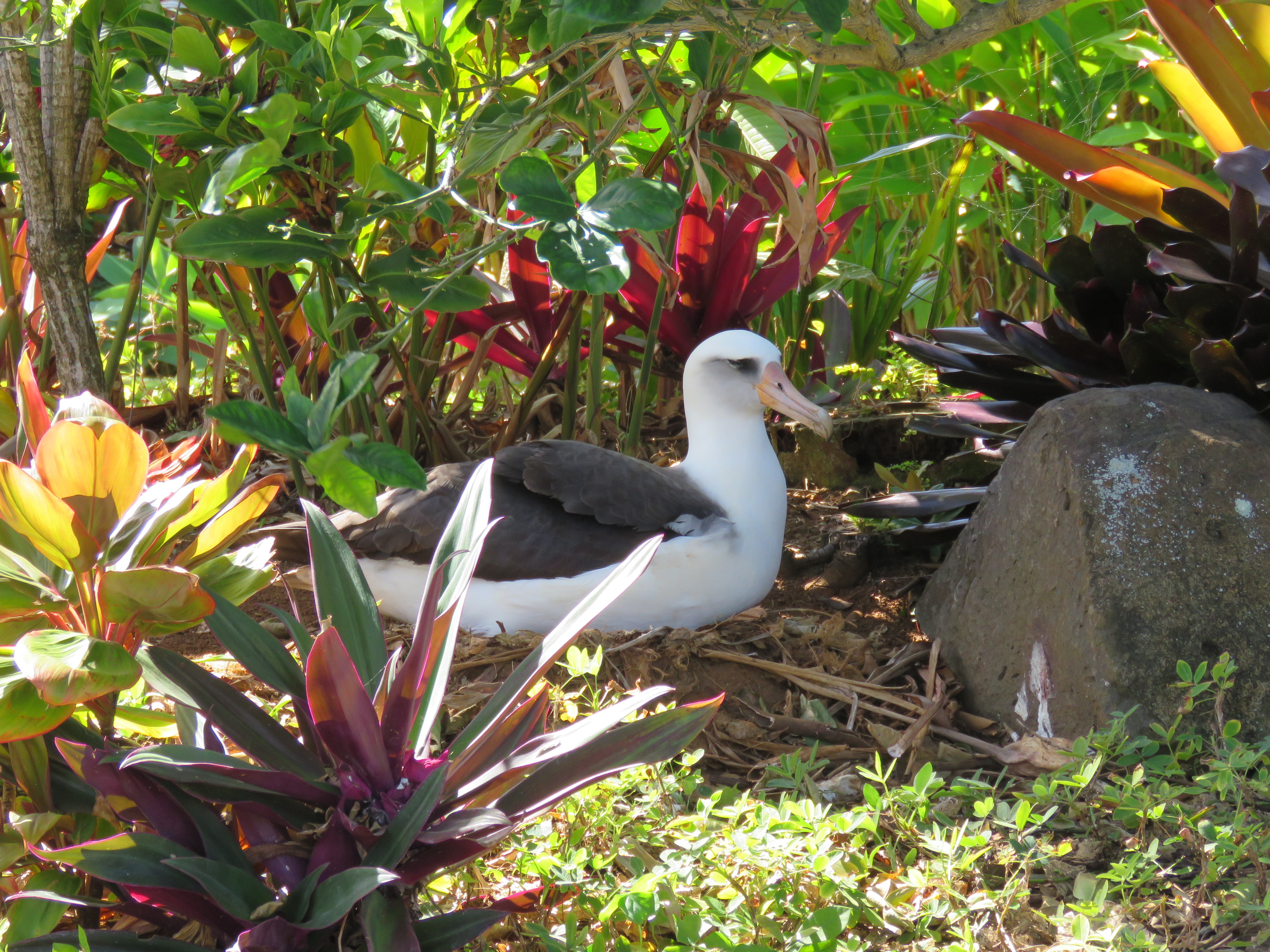
Nesting Laysan Albatross, Princeville
The chicks are grey and fluffy and super cute, in an albatross kind of way! The ones we saw were cared for/doted on so lovingly by their parents – it was very sweet. Sometimes a father or mother will refuse to get up off the nest and give the other parent a chance to dote on the egg or chick. Cathy was careful not to upset the birds too much but needed to make note of each nester’s band number.
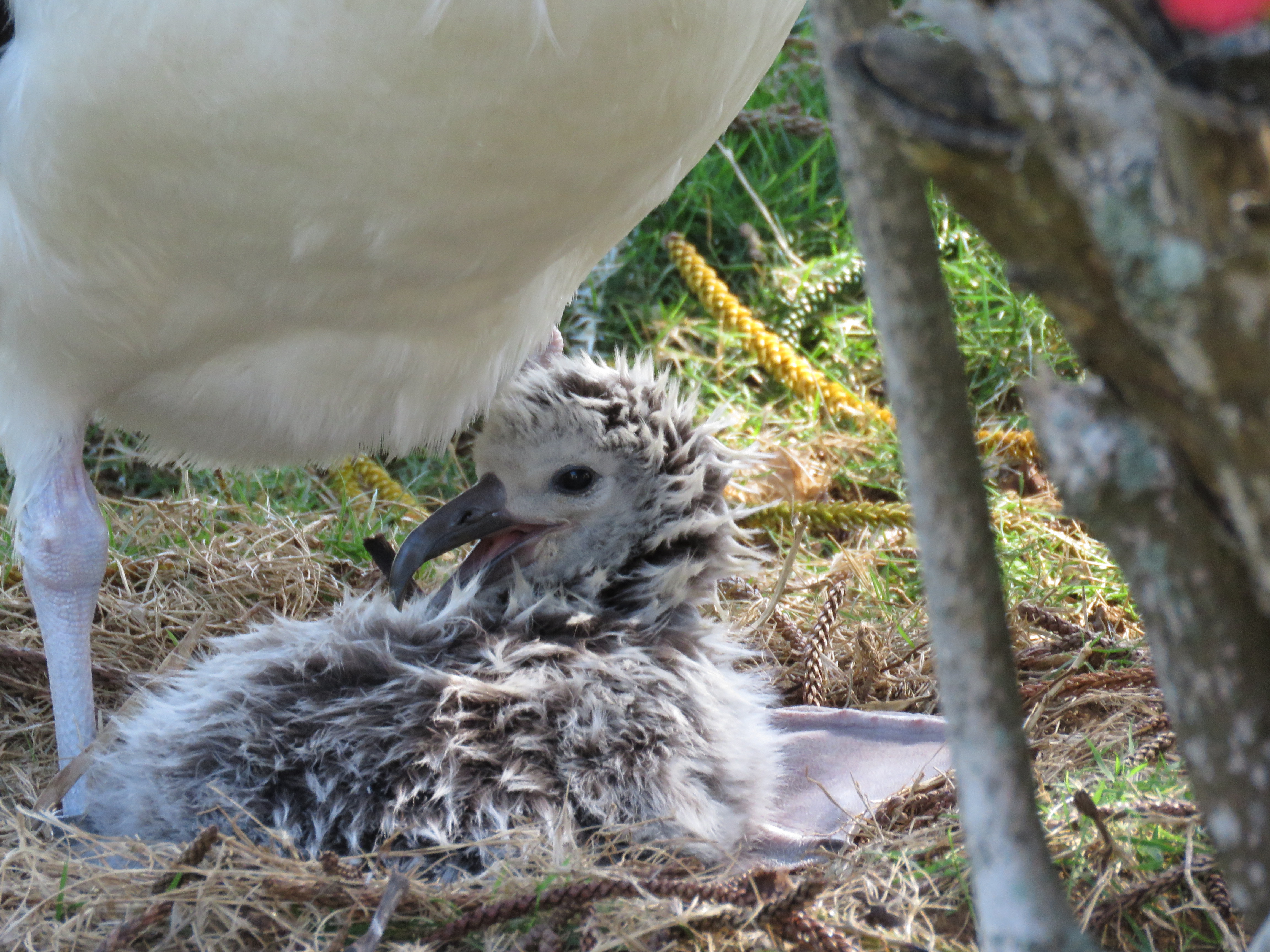
Laysan Albatross Day-old Chick
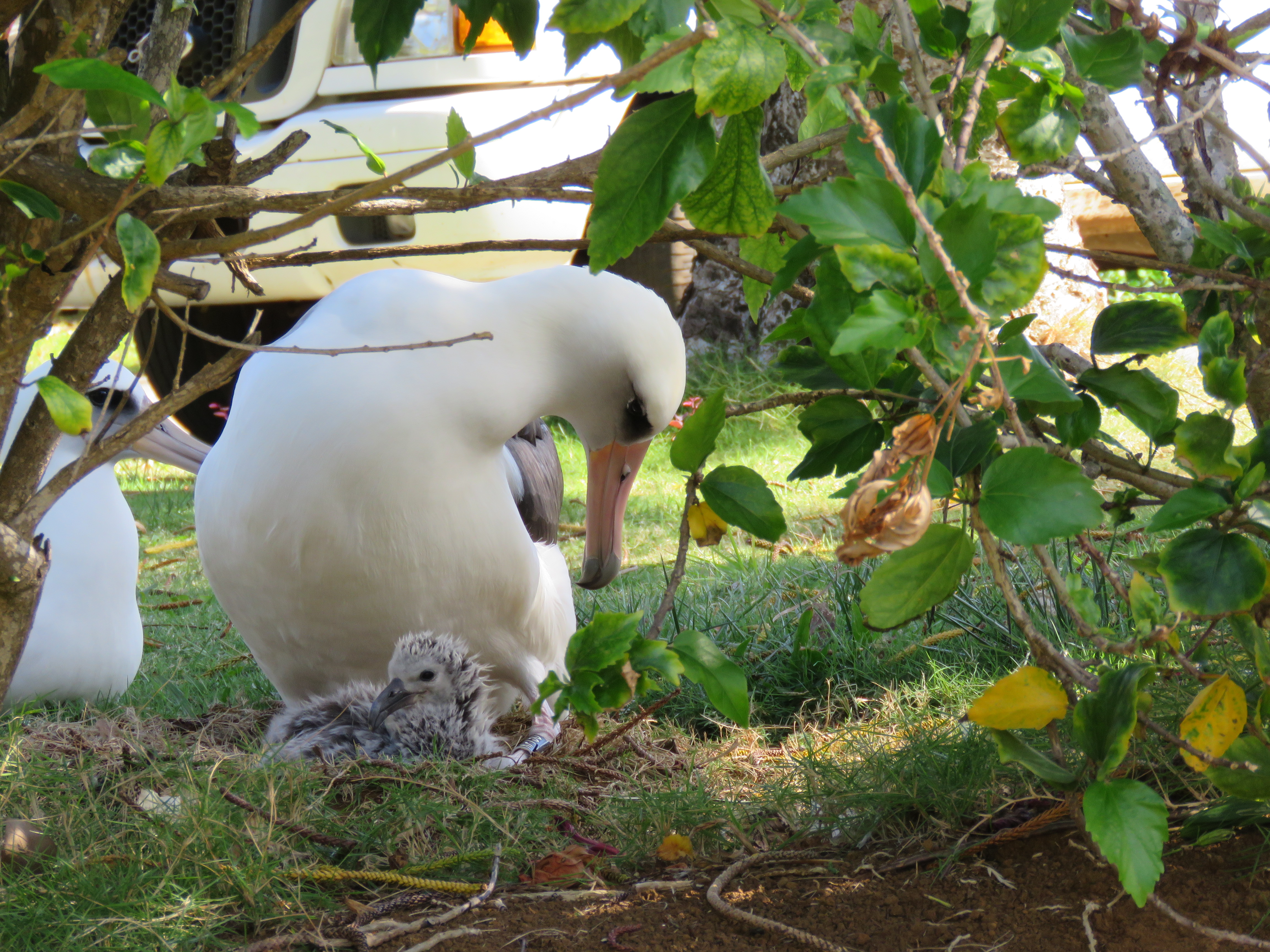
Laysan Albatross Chick and Parent, Princeville
During their nine-month process from courting to fledging, albatrosses kind of define this Princeville neighborhood. It was nice to see that Cathy’s neighbors were looking out for the birds and enjoying watching their progress. Sometimes people get to name birds that hatch in their yards.
On our walk, we got to see the cliff edge where the fledglings take off for their first flight. When we got home, I watched a video on Cathy’s site showing the numerous attempts that a particular juvenile “CJ” made before he took flight for the first time. It was very exciting. Since they are not able to get enough lift by running, like their parents do, the juveniles need a cliff edge where there is a breeze to provide the lift they need. Cathy told a story of one juvenile that didn’t quite get it right and ended up stranded in the ravine. She ended up climbing down a very steep edge in order to save the bird. It was so tired when she grabbed it that it didn’t resist her clutch at all. However, as soon as she got the bird to safety, it bit her. Oh well, all in a good day’s work protecting and saving wild and beautiful creatures!
Many thanks to Cathy for her important and valuable work and for editing this article for accuracy.


 DeeMusings