Category Archives: Travels

Notes of our travels and adventures

To Middle Earth and Back

If you are fortunate in life, there are at least a few times along your path when you’ve found yourself somewhere in nature that takes your breath away with its beauty or when you’ve been given an opportunity to do something that really scares you or is very difficult and you do it anyway. The trek we made recently on the Milford Track was all of these things and more for me.

The Milford Track is considered one of the top ten hikes in the world (some say it’s #1) and is located in Fiordland National Park, which lies along the south-western coast of New Zealand’s South Island. The Milford is 33.5 miles long and goes from the top of Lake Te Anau, through a canyon, over a 3,300’ pass, and then along a river, ending at the Milford Sound. Each day, a maximum of 50 unguided and 40 guided hikers are allowed to begin this one-way trek.

The prep work for this adventure started months ago when Bill and I heard about the Milford Track online and from a colleague of Bill’s who had taken both of his daughters individually to do the Milford when they graduated from high school. The area’s beauty drew us in but we knew we were not in shape to do real backpacking at this point in our lives, so we signed up for a guided trip back in December with a company called Ultimate Hikes. When we left Ithaca, we made sure that we had clothing and gear for all kinds of conditions since the Milford is known for extreme and changeable weather (sun, rain, flooding, wind, snow and cold). In hindsight, we had no idea what we were getting ourselves into!

Normally, we like to do a fair amount of hiking but we knew we needed to build up our stamina in preparation for this trek. So, while in Hawaii and New Zealand, we focused on longer and more challenging hikes. Everywhere we’ve been in NZ, we’ve met people of every age that have done the Milford and all of them recommended wearing boots that support the ankles and using hiking poles. In the weeks before we left for Queenstown and the start of the trek, I was busy going over our gear and purchasing what we didn’t bring from Ithaca.

It was during this time that I realized that I had a fair amount of anxiety welling up about the track. Two weeks before leaving for Queenstown for the start of the Milford, we heard about a 68 year-old man who had fallen to his death on the trail –not what I needed to hear! The day before heading to Queenstown, I started to feel rather ill and run down and while attending the pre-track briefing on Wednesday night, I was seriously considering bailing out altogether. Nevertheless, this was a challenge that I didn’t want to back down from and I was determined to find out what the Milford was all about.

Day 1: Into the Deep Forest
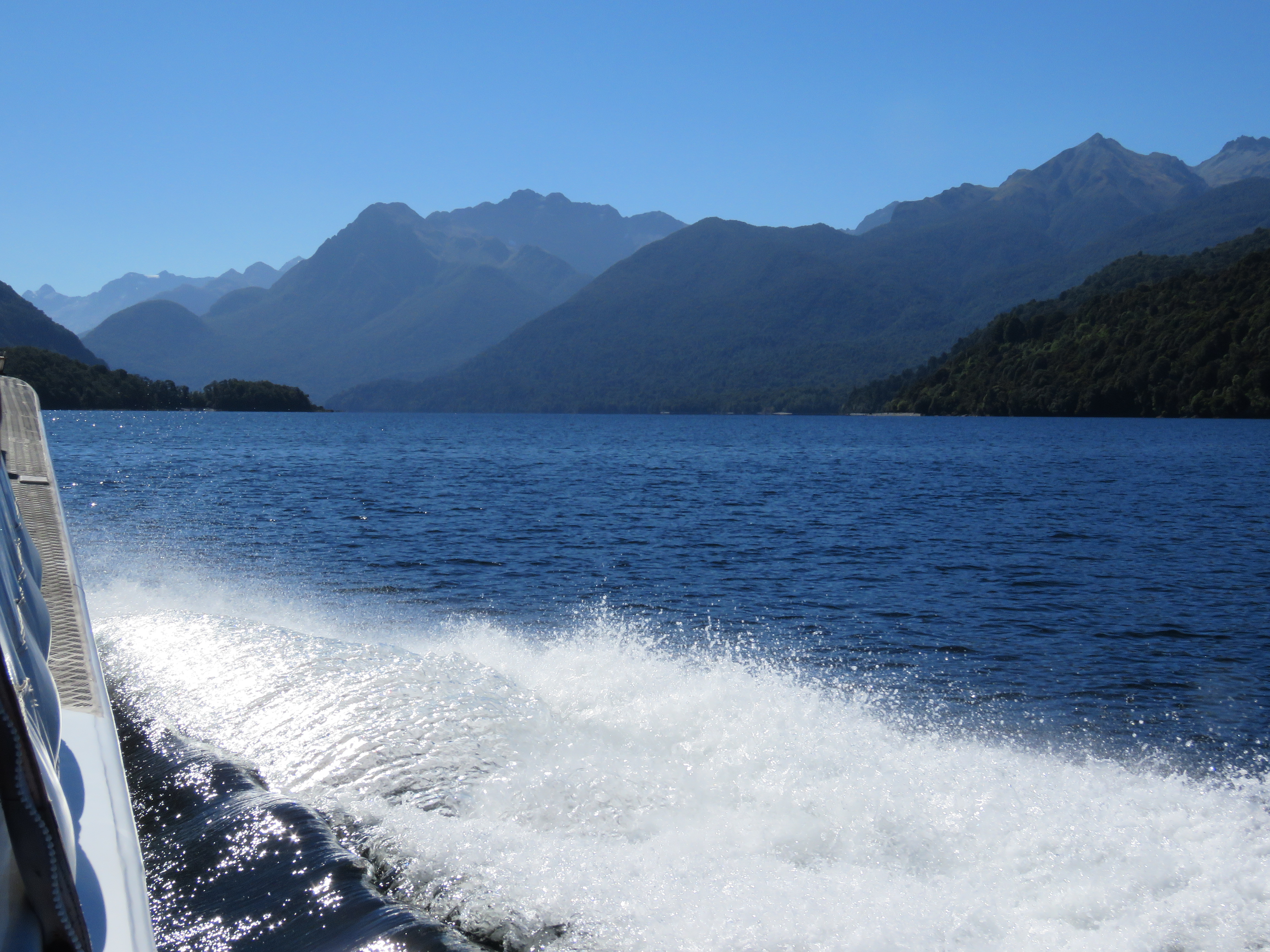
The first day of our adventure was pretty laid-back and was all about getting to the trailhead and our first lodge. We boarded a large bus with our group’s 31 other hikers and three guides and headed through mountain valleys, grassy farmlands and pastures dotted with sheep and cows on our way to Fiordland National Park. They aren’t kidding when they say that New Zealand has a lot of sheep! As soon as we reached Fiordland, we were in beautiful forests and growing mountain peaks. At the edge of the park sits a deep, long and narrow glacial trench called Lake Te Anau. This is where we boarded a boat with about 50 other hikers doing the Milford unguided and rode from the southern edge of the Lake to the northern. This was a beautiful start to our trip as the sky was clear blue and the air was warm. The steep cliffs of Te Anau were beautiful and dramatic and her waters were a majestic turquoise blue. Upon landing, we had a short one-mile hike to Glade House, our first lodge.
IMG_1224

Boat ride on Lake Te Anau to trailhead
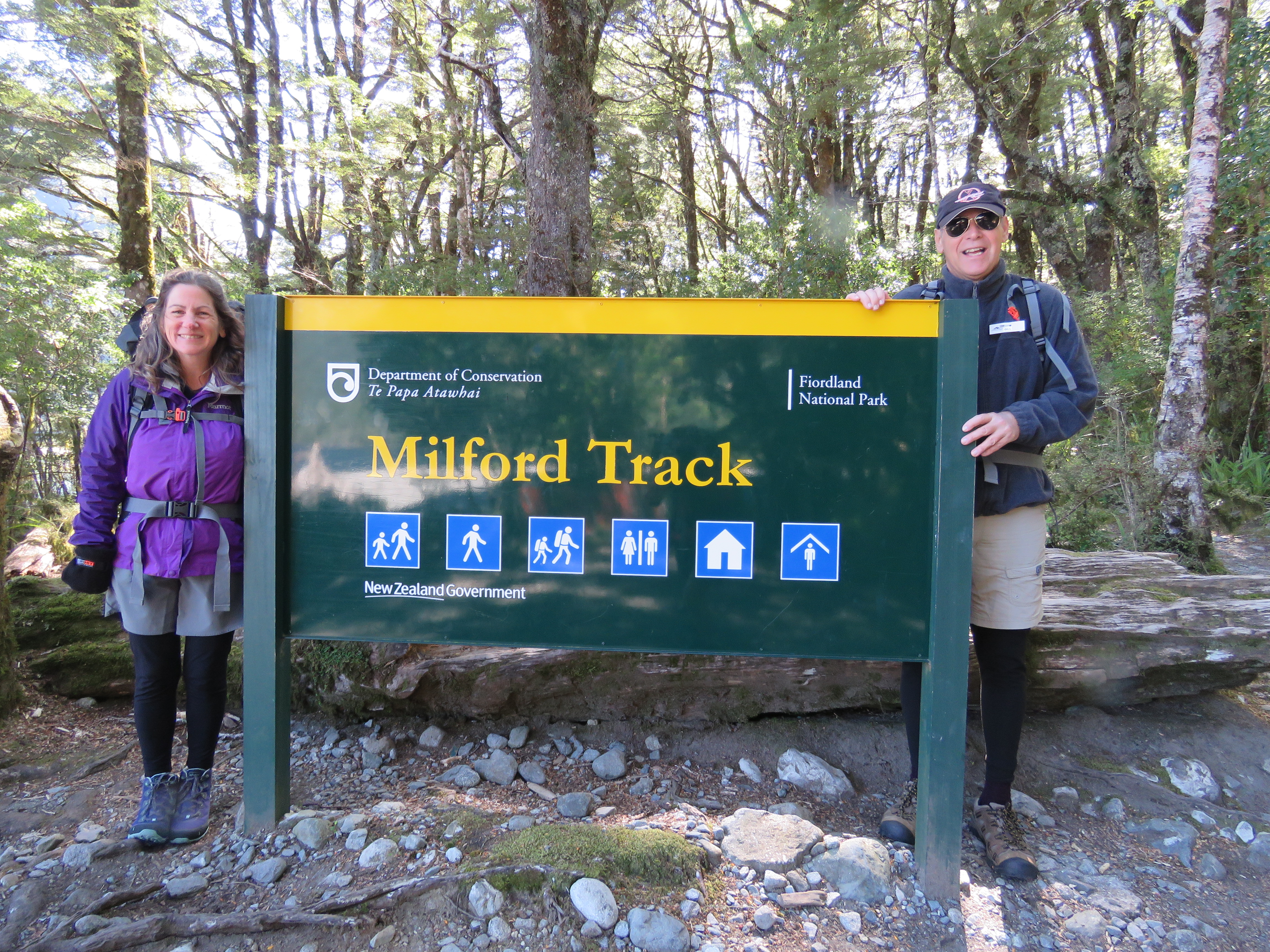
IMG_1229

At trailhead


Each night of the Milford we stayed in a different lodge along the way, all expertly maintained by Ultimate Hikes. The rooms were monastically appointed and didn’t have any heating but they did have hot showers and good mattresses! Each lodge had sinks, wringers and drying rooms so that we could wash and wear the same clothes each day to reduce the weight we were carrying. The generator was turned off at 10:00pm and was turned on between 6:00 and 6:45am depending on the day. We were instructed to leave our lights on at night so that when they came on in the morning with the generator, this would be our wake up call. This worked pretty well since it was still very dark outside at 6am.

Staff at each lodge prepared great breakfasts and dinners each day. At breakfast, we packed up our lunches and snacks to keep us fortified along our walk. Even with all of my food incompatibilities, I always felt I had enough to eat. They were more than willing to prepare or provide foods without gluten, dairy and soy – which I really appreciated. Compared to our fellow hikers who were doing the Track unguided, we were traveling quite extravagantly. The unguided walkers stayed in bunk-houses without showers, and had to bring their own food, water and sleeping bags.

Aside from feeling nauseous and having lower intestinal cramping, I enjoyed our travels to Glade House. However, after arriving, my digestive system, well, it went haywire and I was left pretty run-down at the end of the day. Evidently, I had some sort of virus that Bill also got but on a much smaller scale – not the state in which we wanted to embark on three more days of long/demanding hiking. Nevertheless, we’re glad we persevered.

Bill decided to carry most of my clothes and gear due to my back issues and lack of energy from being sick. I was moving pretty slowly but not having a lot of weight in my pack helped tremendously.
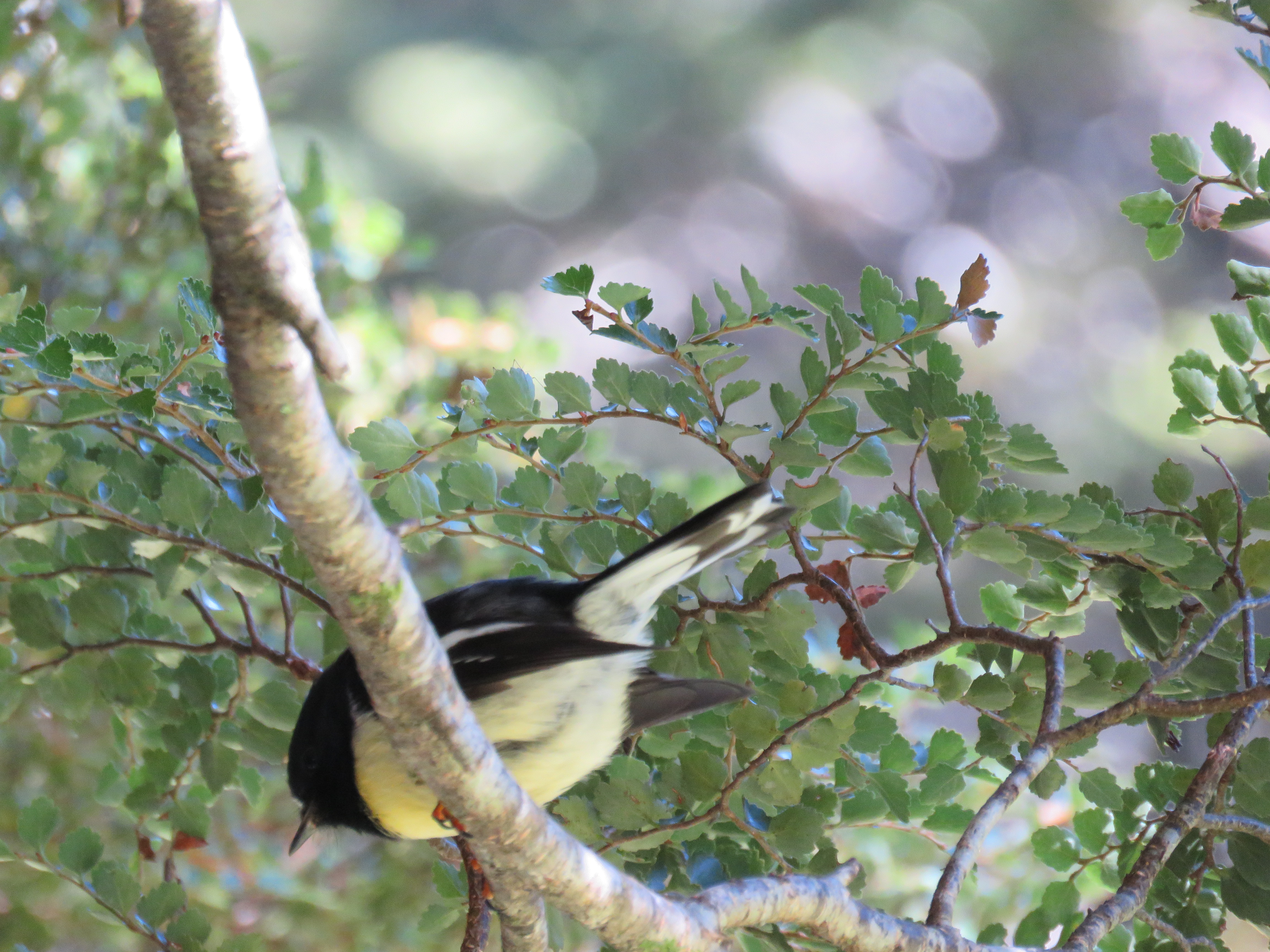
South Island Tomtit
South Island Tomtit

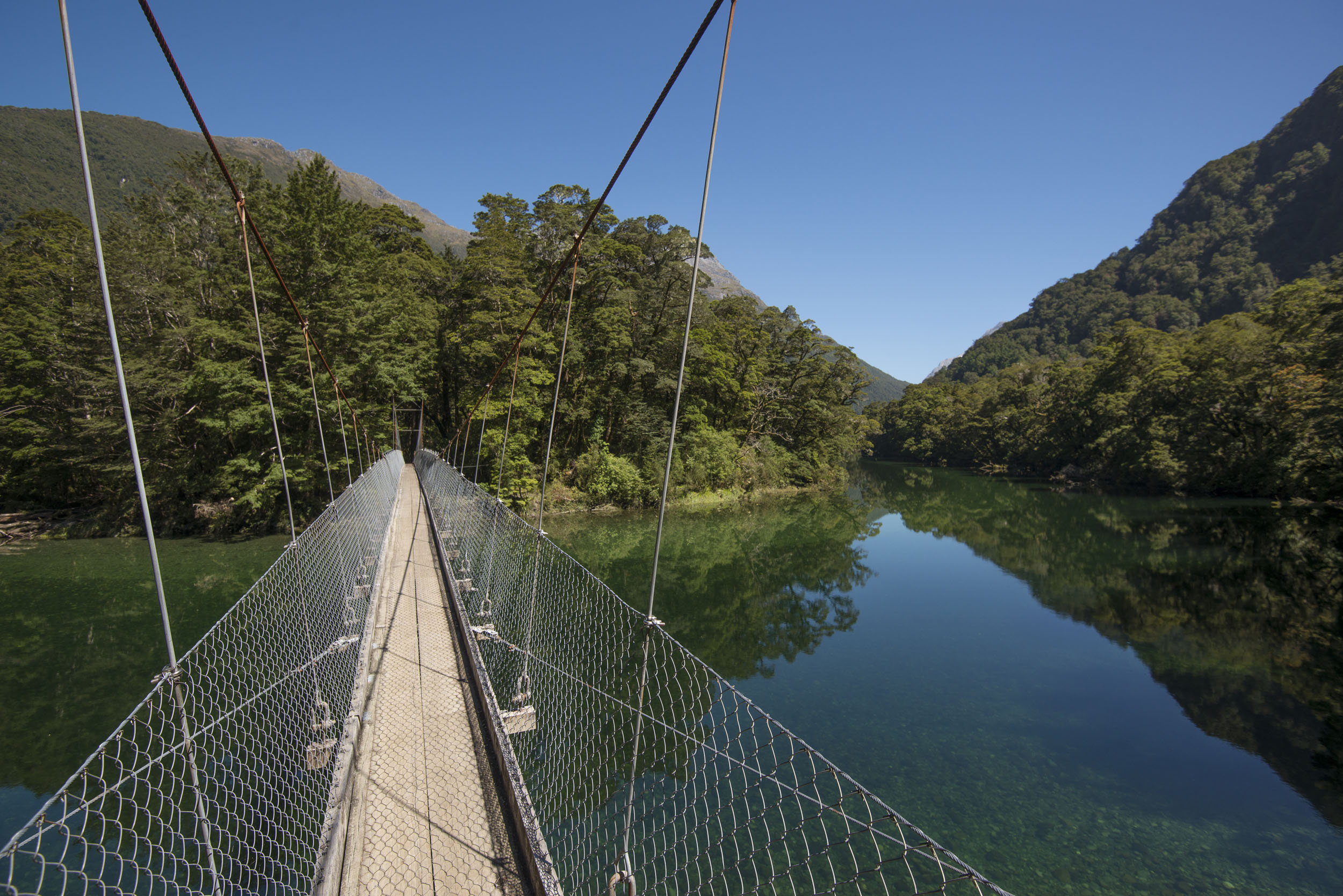
Bridge across Clinton River on Milford Track

Bridge across Clinton River on Milford Track

Day 2: Beautiful Valley
This was our first real hiking day, which entailed walking 10 miles from Glade House to Pompolona Lodge through the Clinton Valley – one of the most beautiful places I’ve ever been. We went over the Clinton River on a long swinging bridge and then followed the river all day. The walk was easy and flat and since we were not under a time crunch, I was able to take several pictures of this valley’s awesome beauty. The granite peaks around us rose nearly straight up into the bright blue sky. The Clinton River was incredibly clear and clean. We were able to see and hear the whistling call of the endangered Whio or Blue Duck in one of the many rushing torrents along the way. As well, we saw the South Island Robin, South Island Tomtit, Bellbird, New Zealand Fantail, Paradise Shellduck and the tiny Rifleman. I had the experience of feeling like this was the real New Zealand, the country I saw amazing pictures of on TV, the place where The Hobbit and Tolkien’s trilogy were filmed because of its beauty and incredibly rugged landscape. The peaks around us made me feel dwarfed and tiny by comparison in both my size and importance in this big space. What an amazing opportunity to experience such grandeur first hand.
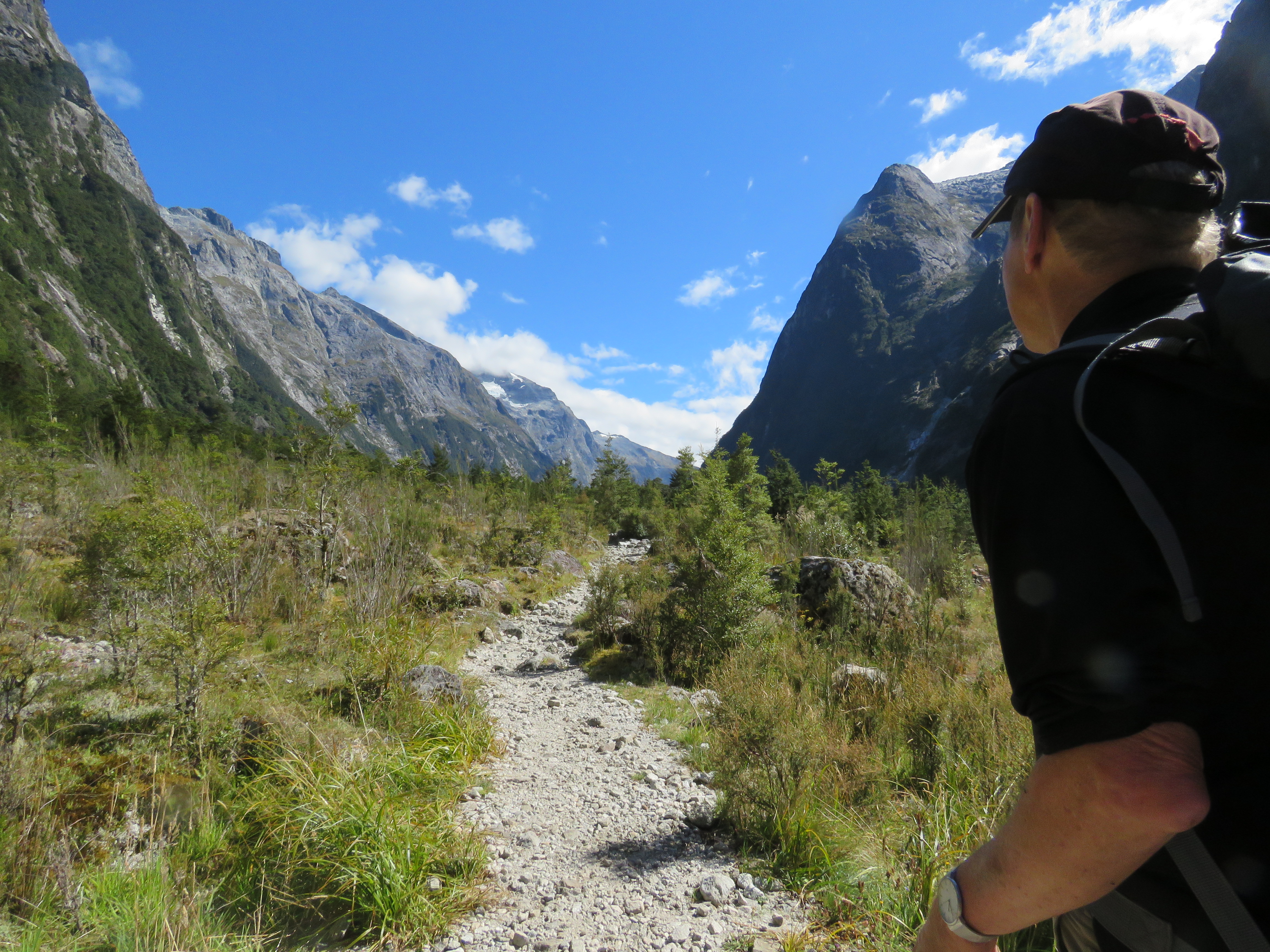
IMG_1250

Hiking the Clinton Valley

IMG_1272

Along the Clinton River


The trail was well maintained and was rerouted in several places due to erosion from storms and river damage. Pole markers along the way were placed to denote the track in flooding situations. We were happy to have the sun and warmth but could see clouds gathering ahead of us – an omen of the next day’s weather.

As we came to a clearing on the valley floor, we were able to catch a view of MacKinnon Pass and the hut at the top where we would have lunch the next day at about 3,300 ft. It was at once both an exciting and incredibly scary sight for me. As a 25 year old, I had backpacked with a lot more weight on my back and had gone up much higher peaks in a day, but 25 years later, I had a lot of anxiety about this mere 2,000 foot climb.

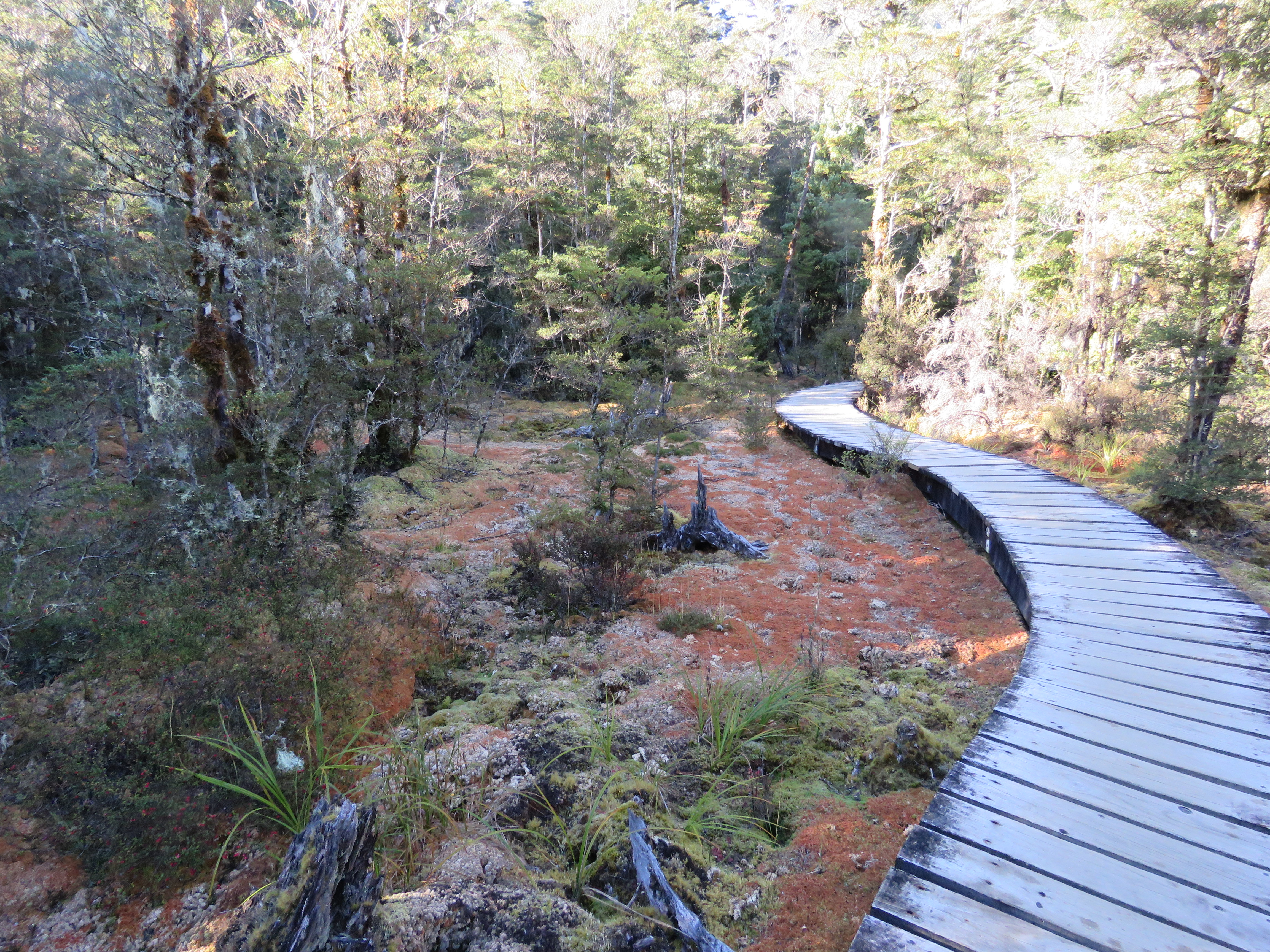
As we walked further into Fiordland and closer to the ocean, we could see the forest flora slowly changing into rain forest terrain with many different types of ferns as well as mosses growing on the trees. The vegetation grew thicker and the air was more humid.
IMG_1247

Wetlands

IMG_1273

Quick-rising, underground river


At the end of the day, we were exhausted but we made it to our lodge room at about 3:00, which provided time to do our laundry, take a shower, and take a short nap before reporting for dinner at about 6:30. Pompolona Lodge was like a big tree house with many branches. It was nestled on an incline with trees growing up all around. We walked everywhere on boardwalks and had beautiful views of the valley and MacKinnon Pass high above. At dinner we enjoyed a little wine and great conversation with a couple from Sydney before getting a briefing of day three’s adventure. We got to our beds just before the lights went out at 10:00. After walking 10 miles on low-energy, you’d think I’d sleep really well, but evidently my adrenal system was busy revving up for our big hike the next day.

View from Pompolona Lodge

View from Pompolona Lodge

Day 3: The Dragons Awaken
On day three the generator came on at 6:15 to a light rain. We had to eat breakfast, make lunch and pack everything up to be on the track by 7:35 and we weren’t going to be late. Bill and I had a speedy and efficient system worked out for getting dressed and out the door quickly. However, this was the first day we needed to get our rain gear and hiking poles out and that took extra time for which we hadn’t prepared. Nevertheless, we were on the trail by 7:45.

After walking for at least 45 to 60 minutes we hadn’t seen anyone around. This started to worry me as we approached the base of the MacKinnon Pass. I started to grow concerned that perhaps the last guide had already left ahead of us and didn’t realize we were still at the lodge. The further we went along the trail, the more worried I got that we had been left behind as it were and that nobody knew where we were. Finally, my fears were put to rest when our guide Akiko joined us from behind with a cheerful, “Hello Bill and Diane!” I was so relieved to know that we weren’t alone in this big wild place. Looking back, I realize I was overreacting but this was just the first of many fears and challenges I would face on the nine-mile hike to Quintin Lodge.

I think most people would wish for clear, dry weather as they go over a pass high above beautiful rivers and valleys. After all, it’s nice to see the beautiful view, and all of the Milford Track brochures show a gorgeous blue-sky vista from the top of MacKinnon Pass. However, this was not one of those days. It rained literally all day, sometimes a light mist and other times it really rained. Nevertheless, the rain dragon came with a pot of silver because the mountainsides burst alive with loads of beautiful streaming waterfalls. Each turn of the trail going up the pass there were gorgeous strands of water falling hundreds of feet. We realized that this sight would not have been possible if not for the rain.

As we went higher and higher up the side of the pass and climbed above the tree-line, my next dragon reared its ugly head, that of acrophobia. Even though I had poles to give me balance and good boots, my fear of falling off the edge of this mountain was pretty intense. Back home, if you’re walking on wet rocks, they are very slippery. It took me a while but I realized that my boots were not slipping at all on the granite boulders we were tramping across. This helped to allay my fears of hurtling off the edge but then my fear of Bill doing this became even more intense. At one point, Bill was about 30 feet in front of me and got his foot caught on a rock. He fell towards the downward (cliff) edge of the trail and for a split second, as he fell, I thought he was going over the edge. In a millisecond, my biggest fear was coming true and it felt as if my life was about to change forever. I screamed just as Bill let out a big grunt as he fell onto the large boulder next to the trail that broke his fall. I was so relieved and also so full of anxiety that I wanted to just stop right there on the track and cry. But I didn’t.

At some point, Bill and Akiko realized that I was walking very slowly. I didn’t realize that my pace was that sluggish but I guess I was still recuperating from my gut problems and I just didn’t have my usual energy back yet. Akiko kept asking if I would let her carry my pack and I said no several times but finally relented about half way up the pass. My extra pack didn’t slow this woman down a bit. This was her 25th time doing the Milford and she viewed carrying extra packs as a good workout! What a relief this was. Akiko amazed me again at the top of the pass as she offered us hot tea and orange drink she poured out of canteens that were stuffed in her pack. This bit of warmth was heavenly up there because the 30-minute jaunt to the Pass Hut was beautiful but not a walk in the park.

The wind at the top of the pass turned the raindrops into little pellets of ice. Even though I had a raincoat and rain pants on, I quickly got very chilled and couldn’t get the to the hut fast enough! My hands were frozen and wet under my fleece gloves and all of my clothes were wet from sweat. At one point I thought I might get blown off the edge but I crouched down and finally made it to a less windy patch of trail. Once reaching the hut, I finally let all the tears run as I stood under a heat lamp drinking hot tea and holding a hot water bottle on my belly.

For about ten minutes I was just speechless. I don’t know if I was in shock, had the beginnings of hypothermia or was just in disbelief that I actually made it to the top. I finally regained my senses and began to process where I was and that the walk down was still ahead. As far as we had gone vertically, we still had that many miles to go down on the other side of the misty pass and then to Quintin Lodge.

We had a short break to eat and drink warm beverages before heading down the mountain. Our guide, Fe offered to carry my pack the rest of the way to the Lodge and I took her up on it. We were the last walkers off the pass and I knew I needed the help. We started out at a good pace and our poles proved to be really helpful in maintaining balance. The trail down was much steeper than the trail up but it too provided an amazingly beautiful show. As we descended the pass, we came to a huge rounded area replete with cascades. Later, one of our fellow walkers described it as, “an amphitheater of waterfalls.” It was so beautiful I had to stop briefly several times just to take it in. At times we had to walk through some of these waterfalls running down the mountain. The rocks took on a beautiful green color.

The back pain I felt coming up the pass was nothing compared to the pain in my left knee and ankle on the way down. My final dragon to slay was to persevere through physical pain and exhaustion as we made our way through this amazing place. Once we reached the tree line again, the track became a series of wooden steps and walkways along the side of a beautiful raging waterfall that pooled and fell many times. Even though it had been raining all day, the water through this area was still crystal clear. We sang songs and had great conversations with Fe along the way. It was truly a relief and comfort to have Akiko and Fe with us this day. I fear I’d still be out there in the wilderness somewhere if not for their help!

Upon arriving to Quintin Lodge, we were beyond exhausted. We showered but didn’t have enough time to clean our clothes and hang them up to dry until after dinner. As you can imagine, space in the drying rooms was hard to come by since the whole group arrived sopping wet from sweat and being in the rain all day. Nevertheless, dinner that night was sweet and relaxing. We were all a little high from our accomplishment and the beauty that nature provided to us. Surprisingly, it took me a while to get to sleep. I scrawled a few words about the day in my little notebook and ended with, “The waterfalls and amazing views here were beyond description, but I’ll try to write about it sometime anyway. Amazing adventure.”
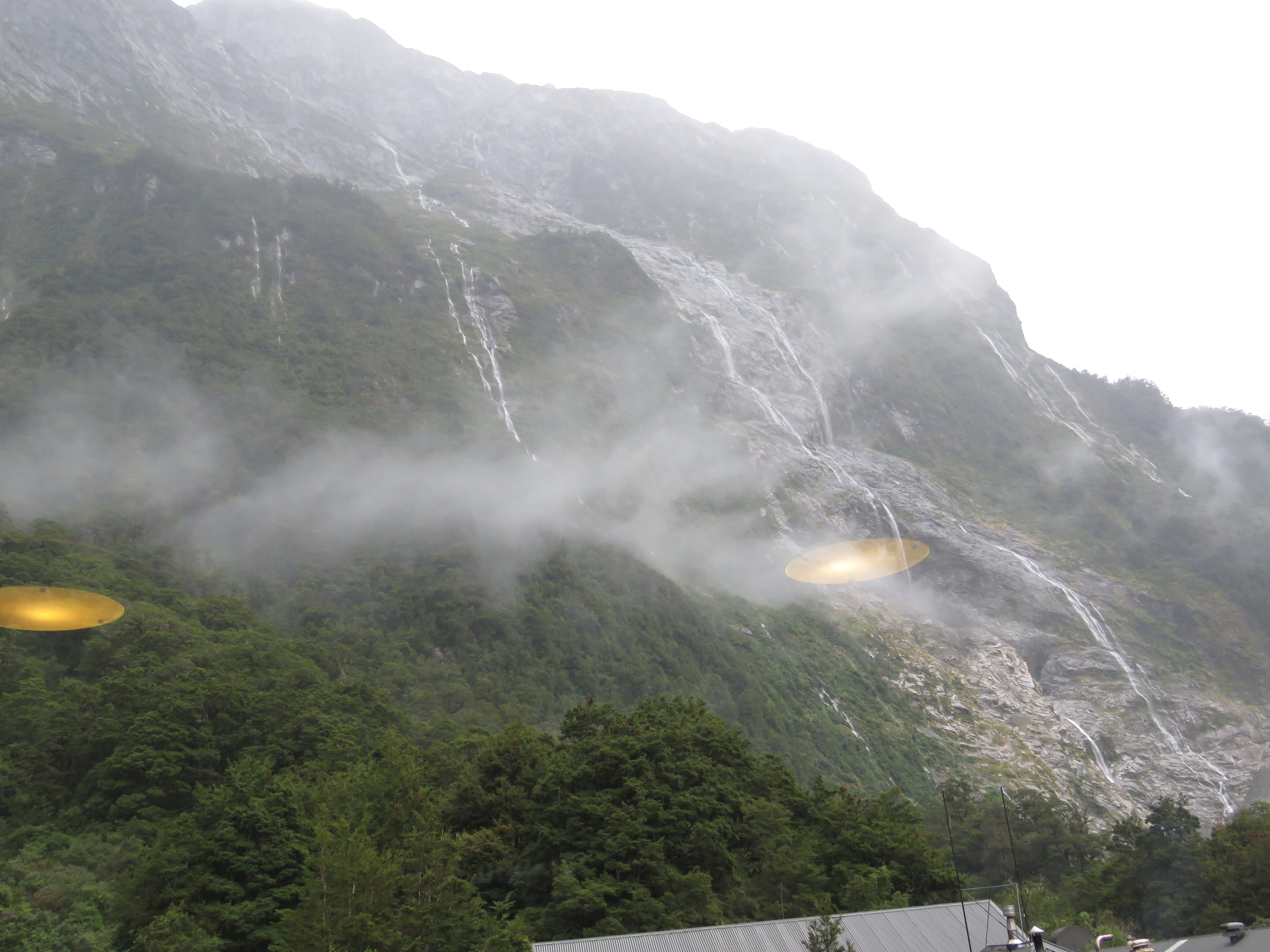
Waterfalls above Quintin Lodge

Waterfalls above Quintin Lodge (please excuse the reflections!)


Day 4: Many Miles to Milford Sound
We awoke at 6am to a light mist and quickly got ourselves fed, geared up and on the trail by 7:30. We had a long 13 mile walk ahead of us and needed to make it to Sandfly Point by 4:00pm to catch the last ferry to Mitre Peak Lodge. Our boots were still pretty wet as we put them on but our wool socks kept us comfortable. Thankfully, the morning mist cleared away and we were able to ditch our rain gear within 30 minutes. We started out at a good pace but soon enough, an area on my left ankle where my boot had rubbed the day before was causing me a lot of pain. At one of the huts along the way, our guide Logan wrapped it up for me using foam pads and tape. This was a real help – once again our guides were exceedingly helpful.

The closer we got to Milford Sound meant that stopping for any length of time would bring on a swarm of biting sand flies, so our breaks were short. The sand flies were fast biters and leave a nasty, itchy welt that lasts for a week or more. I’m usually a magnet for biting bugs and today was no exception. We saw the Kea parrot and a pair of noisy Western Weka along the trail where we stopped for lunch. The Weka is one of several flightless birds found only in New Zealand and is, like so many others, vulnerable to extinction.

Once again, Bill and I found ourselves bringing up the tail of the group but it was nice to talk to Akiko about her life and her home country of Japan. I was again thankful to her for taking my pack about one-third of the way in. The views of the valley, river, waterfalls and Lake Ana along the way were breathtaking. We saw a pair of beautiful Brown Teals in the lake and paused to take them in.

With four or five miles still to go, I realized that I was walking pretty slowly and felt very tired. Unfortunately, we didn’t have time to take a break. If we were going to make the boat, we were going to have to make up some serious time. So at the coaxing of Bill and Akiko, I had some more juice drink and ate some chocolate. This powered me up a bit and allowed me to charge through the next several miles – and then the exhaustion really hit! I was completely aware that I was pushing way beyond what my body was willing to do but I had no choice but to keep putting one foot in front of the other.

As I continued to push myself way beyond my physical comfort zone, the beauty all around me amazed me again and again and transported my mind away from exhaustion and pain. We were deep into rain forest conditions now. The vegetation was so thick you couldn’t see more than about 10 feet into the woods due to the Spanish moss, ferns and vines. I remarked several times how amazing it was to see so many different kinds of ferns – tiny ones, huge ones, and the most beautiful ones that looked like starfish. Not surprisingly, the national icon for New Zealand is a Silver fern. We hiked over several more high swinging bridges that passed over rushing rivers and beautiful ravines.

At about one mile to go, it was quite a relief to realize that we had enough time to make the boat without rushing. As we approached the end of the trail, my conversation with Akiko finally wended itself to the topic of Buddhism. Growing up in Japan, her experience of it was very different than mine. As I related to her my own understanding of Buddhism and the Dharma, I remarked that I felt disappointed that we hadn’t started talking about it before we had only a quarter mile to go. I was eager to hear about what growing up in a culture heavily influenced by Buddhism was like. I don’t remember Akiko’s exact words but she said something to the effect that, “I guess we needed 33 miles before we could get to this topic.” As I look back on that conversation, she was right. It took all those miles to just get to where I was all along. I realized that I had just gone on a very long journey and yet I hadn’t really gone anywhere.

The Milford Track ends at Sandfly Point which, as you might guess, is sandfly central. Gratefully, we had an enclosed cabin in which to retreat from their bites and were supplied with lots of cookies, juice and smiles from our guides and other very exhausted hikers. With 15 minutes to spare, it was such a relief to make it to the end in one piece. As the ferry puttered along the short jaunt from Sandfly Point to town, the view turned from beautiful to spectacular as Milford Sound came into view. Steep, jagged granite cliffs descended into amazing, jade-shaded water. A huge waterfall greeted us as we entered the port area. Looking down the sound toward the Tasman Sea was simply breathtaking.

Arriving at Mitre Peak Lodge was a bit surreal due to my level of weariness. That night we enjoyed celebrating our accomplishment together. After another great meal, the guides lead a short ceremony where each hiker received a certificate of accomplishment. About half of the group stayed up to continue celebrating and sharing stories but Bill and I were in the overspent and fried group that went to bed as soon as we could! Before falling asleep, I realized that I had used every resource I could muster on this amazing 33.5-mile trek to the Milford Sound. There have been many times in my life that have been challenging, where I had to persevere through real difficulties. By utilizing all of my coping resources, I somehow made it through those tough times. I felt relieved that once again, I had defeated my personal scary dragons and had lived to tell the tale.
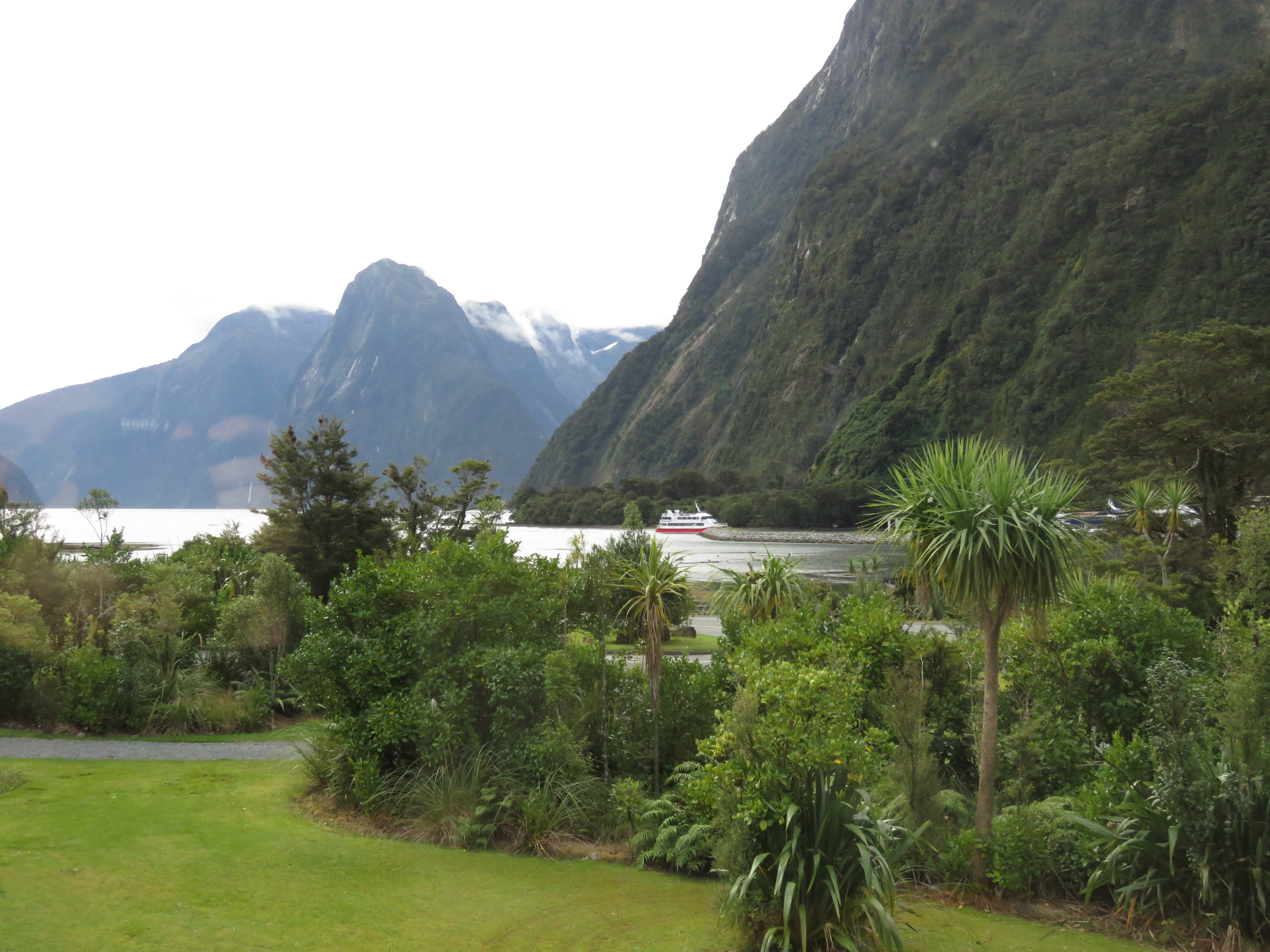
View of Milford Sound from Mitre Peak Lodge

View of Milford Sound from Mitre Peak Lodge

Day 5: Milford Sound to the Tasman Sea
The last day of our journey included a two-hour cruise through the Milford Sound and a long bus ride back to Queenstown. Still weary from 13 miles of walking the day before, we boarded a small, day cruise ship at 9 am and headed towards the Tasman Sea at the mouth of Milford. Once again, words fail to express the beauty and magnitude of this amazing place. The view from our lodge was spectacular and as we traveled down the sound, it just got more and more amazing. Steep cliff walls came directly into the turquoise water, leaving little room for fur seals and shags (cormorants) to take a break. Waterfalls flowed down hundreds of feet and misted the air. The few boats in the sound looked dwarfed in comparison. As we neared the Tasman Sea, we caught a view of the coast and looked out on the vast expanse of water that lies between New Zealand and Australia – about 1,000 miles northwest of Fiordland.

Milford Sound from harbor

Milford Sound from harbor

Milford Sound, boat and glacier

Milford Sound with boat and glacier


It turns out that Milford Sound is actually not a sound but a fjord. After its naming, they discovered that this cavernous expanse was actually carved by an ancient glacier and not a river. It was curious to think that the same forces that created our beloved Cayuga Lake and all of the Finger Lakes in upstate New York also created this massive water valley. To give perspective, Milford fjord is 1,680 feet deep, 2 miles wide, has peaks as high as 6,700 feet and is 12 miles long. In some ways it dwarfs Cayuga Lake which is 435 feet deep, averages 1.7 miles in width, has cliffs of 200 feet high but is almost 40 miles long.
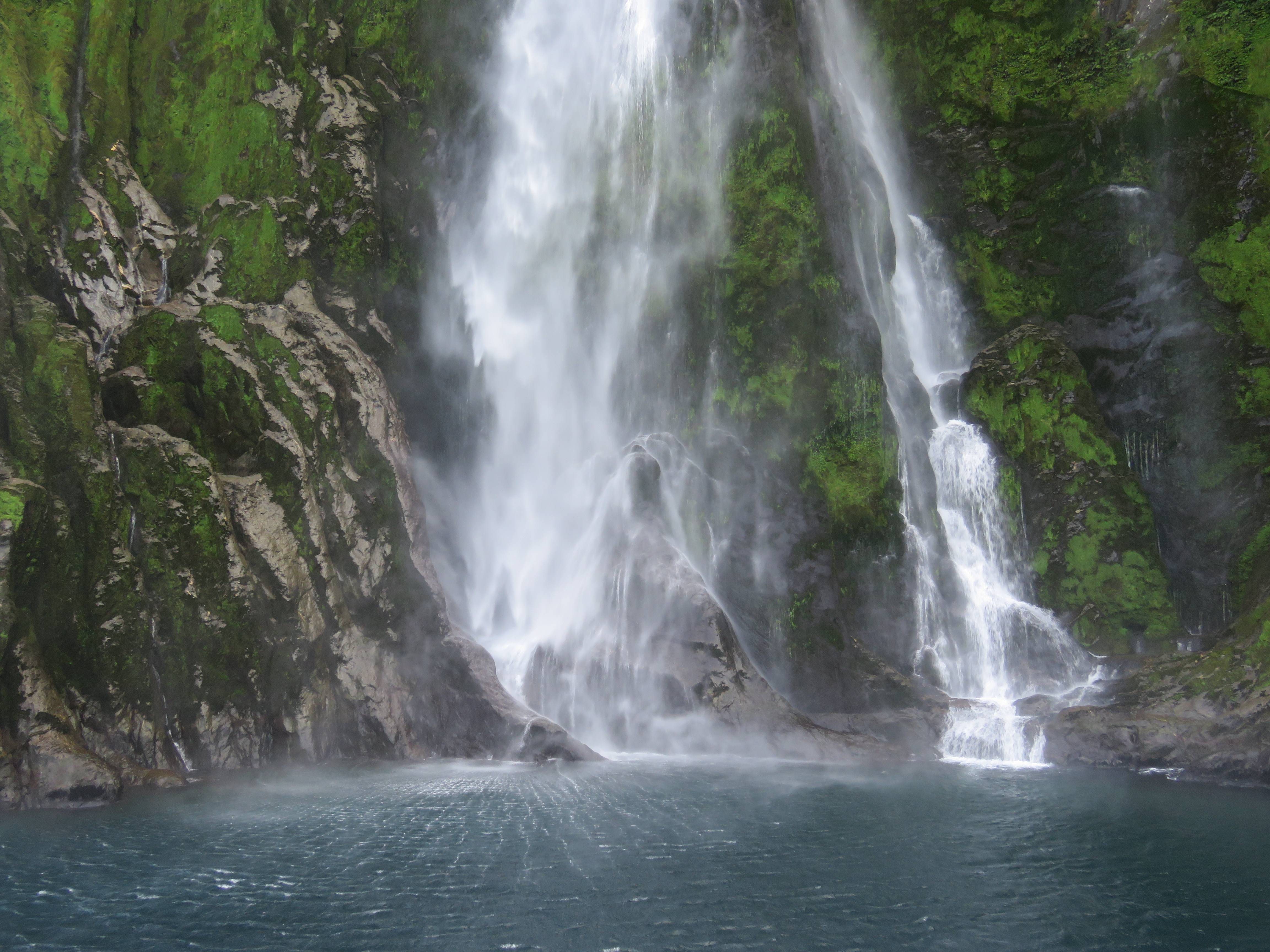
Waterfall at Milford Sound

Beautiful waterfall in Milford Sound

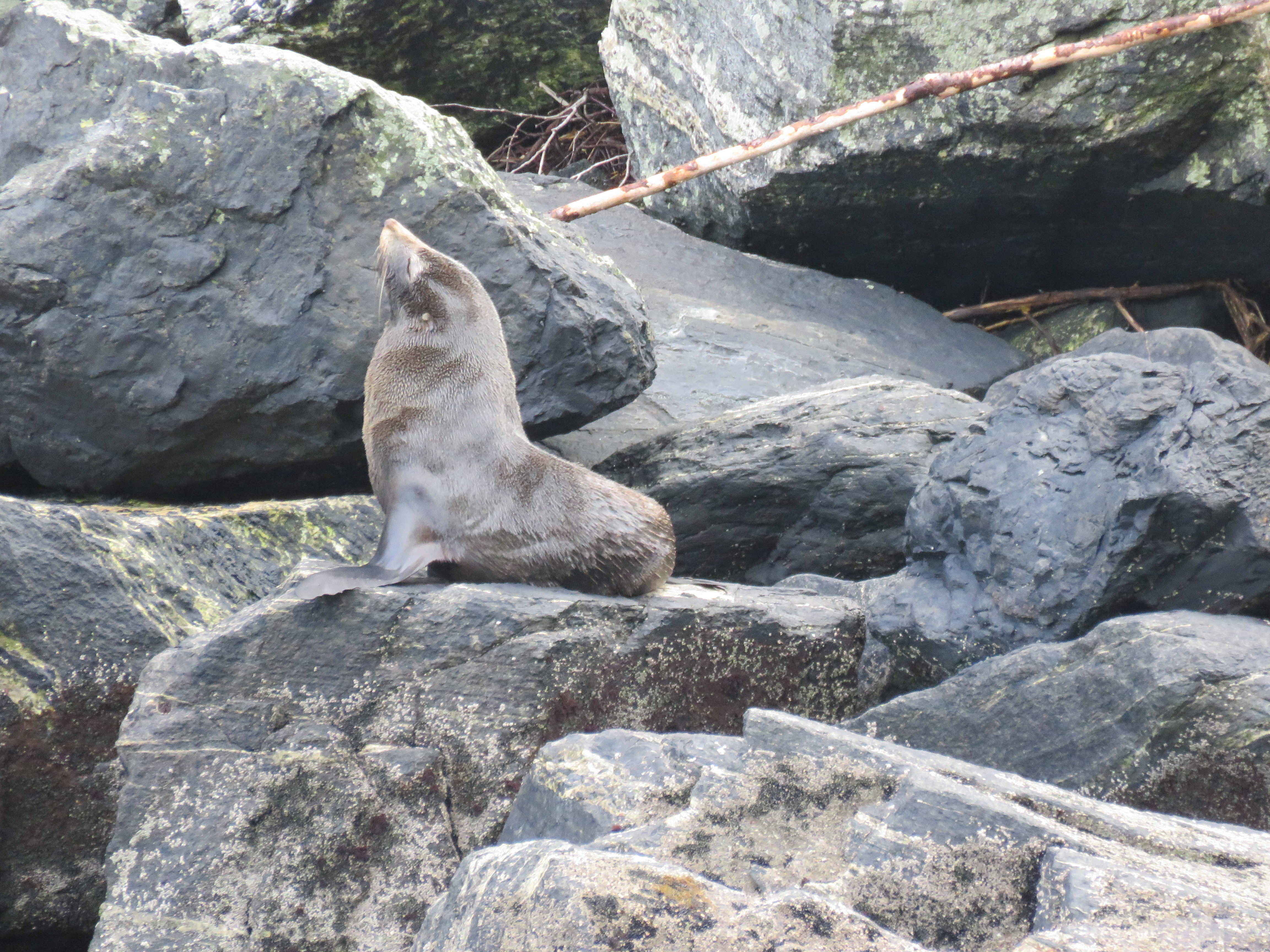
Fur seal in Milford Sound

Fur Seal


With 264 inches of rain per year, Milford Sound is the wettest inhabited place in New Zealand and one of the wettest on the planet. It rains 182 days per year there. As we experienced on the Track, when it rains in the Milford, hundreds of temporary waterfalls form and then disappear a few days after the rain has stopped. Some of the waterfalls never reach the Sound as they are blown and turned to mist before reaching it.

I’m not a real fan of riding busses but the several-hour ride back to Queenstown has to be the most spectacular bus ride I’ve ever been on. Just after leaving town, we traveled up to the opening of Homer Tunnel that is only open in the peak summer months due to the risk of avalanches in winter. Depression era relief workers dug it between 1935 and 1954. Construction started with just five men with pick axes and wheelbarrows and was halted several times during WWII, and due to avalanches and water seepage into the tunnel. Its narrow granite walls are still unlined and appeared very close as we passed through this .75 rough-hewn passageway.

As the bus traveled through Fiordland National Park we took in astoundingly beautiful mountains, and crystal clean rivers and reminisced about our amazing trek from Lake Te Anau to Milford Sound through this wonderful place.

Looking back …
As I look back on the whole experience, I realize that I was filled with fears and anxiety a lot of the time, but I think it’s best to remember and live again in those moments of complete awe of the earth’s beauty, and to relive the knowing that this was something really scary for me and I persevered through it.

Life in New Zealand, Day 2 2/17/15

This is our second day in New Zealand and I’m enjoying noticing the similarities and differences between here and the US. The one difference that is often in the front of my mind is that they drive on the other side of the road here. So far, we’ve been either driven or walked everywhere we’ve gone because neither of us is ready to get behind a wheel yet. Nevertheless, as we walk, we walk on the left side of the sidewalk and try to envision driving on the left as we go along. Even though it is so present in our minds, it is so engrained to look left when stepping off a curb instead of right for oncoming traffic. It really takes a lot of focus just crossing the street. As well, when we see cars coming around a corner, it still makes us jump, thinking that they are on the wrong side of the street. But alas, they are on the correct side!

We rented bikes today and plan to take a ride tomorrow. This should help us to reorient to left-side mentality. We are about 3 blocks from the edge of the University of Canterbury campus and we see a lot of people riding bikes and walking. There aren’t any bike paths near here but the campus has paths and small streets that might provide a good practice area for us.

I’m enjoying the modified English accents here. It’s funny, my thinking voice is starting to have a NZ accent – but it hasn’t started expressing itself out my mouth yet, at least I don’t think so! There are a few words that catch my imagination every now and then – like common sayings and such. The word “fortnight” is one that I have to google when I’m done writing. Also “whilst” is used instead of while. At the grocery store last night, the cashier referred to the shopping cart as a “trolly.” I like that there are a lot of Maori (pronounced mowry with the o like in “power”) words that are part of the common language here.

As Ithacans we feel comfortable here with the way that garbage and recycling are handled. In the house and everywhere we’ve gone on campus, there are three differently colored bins. Yellow bins are for recyclable material such as paper, cans and bottles; Green bins are for compostable material; and red bins are for the “rubbish” which is anything you couldn’t get in either of the other bins. They have weekly curbside pick up of these bins, which is very cool if you ask me. Unfortunately, NZ has not woken up to the scourge of plastic shopping bags. Last year, Hawaii banned plastic shopping bags and a year later they have pretty much disappeared. People are encouraged with discounts to bring their own bags, use the store’s boxes, or use the paper bags that the store provides. This is working well for Hawaii but here in NZ, the grocery stores are pumping out loads of the plastic bags. Granted, they are nice to reuse around the house for various things, but they are pretty nasty for the environment and its critters.

I’m really enjoying seeing different birds here and trying to identify them when I get back to my Birds of New Zealand book at the house. A brand new bird for me that we saw yesterday was the Magpie. This is a rather large, crow-looking bird that is mostly black with large areas of white markings. They were hanging out in one of the fields on the UC campus. We’ve also seen the Blackbird here, which has a yellow beak, is much larger and moves very differently than our Red-winged Blackbirds back home. The male is all black and the female is a brownish color.

Solway House, where we are staying had some damage from the earthquakes that shook Christchurch back in 2010 and 2011 but almost all of it has been fixed and repaired. The house looks great and is very comfortable. The Ilam (pronounced with a long I sound) area where we are located was spared the worst of the quakes. We were in the city center today and saw serious evidence of the damage to buildings that are still being repaired and rebuilt. Approximately 185 people in the Christchurch area lost their lives on February 22, 2011. I can sense a bit of sadness and longing from locals when they talk about the event. The city’s namesake church and several of its oldest and historic buildings were destroyed or severely damaged. It’s commercial center just stopped happening that day and has still not really recovered.

I’ve had the pleasure of noticing that New Zealanders, aside from being very friendly and willing to help strangers, also have more eye contact than I’m used to receiving from New Yorkers. They seem to take that extra few seconds to really look you in the eye as they talk and when you speak in return. I find it refreshing and I really like this aspect of the culture here. I often feel like people around me are moving so fast through life and conversation with others that they seldom actually look others in the eye and make sure that they are connecting.

The weather has been really nice. Temperatures have been into the high 40s at night and in the low 70s during the day. Yesterday, the breeze was quite cool but the sun was intensely warm, so if you stood in the shade, it felt pretty chilly. Today it should get into the high 70s. I’m looking forward to exploring more of Christchurch and taking some pictures to share.

Milford Mind 2/8/15

So, we’re going to New Zealand. NZ is one of those places that I’ve seen pictures of many times and just marveled at the incredible beauty of its valleys, mountains and fiords. I remember seeing pictures and videos of New Zealand and being blown away. Upon hearing about how far away it was, I thought I’d never make it there in my lifetime. I figured the cost and distance were too much. Well, here we are, Bill and I are heading there in less than a week and it still seems surreal to me.

One of the things that is particularly unreal is this amazing adventure we have planned while in New Zealand – hiking the Milford Track. The Milford is a 33.5-mile trail that goes northwesterly from Queenstown to the Milford Sound at the coast. When Bill and I watched a video of this trek, the beauty of it brought tears to my eyes. Gorgeous valleys, steep, otherworldly cliffs, waterfalls and pristine rivers are its jewels. It’s a one-way trail that only 50 people per day are allowed to start. Tent camping is not allowed, you have to stay at designated cabins and lodges along the way. Many people do this trail with backpacks weighted with food, sleeping bag, clothes, and everything else needed for the four-day adventure. Bill and I knew that we were not up to backpacking at this point in our lives, so we signed up to do this trek with a guide company that will tell us about what we’re seeing along the way, feed us, as well as provide a hot shower and bed to sleep in.

I’m excited and also fearful about this most wonderful adventure we are going on. It will be a challenge to hike with a small pack for 8-13 miles for several days in a row. Bill and I have been doing hikes nearby with intent to build up our stamina and prepare for Milford. We’ve hiked a few times on the Wai Koa Loop Trail which is five miles long and winds through a beautiful mahogany plantation, community gardens, a dog park, an organic farm, lagoons and a beautiful garden. The loop trail is part of the Anaina Hou Community Park that also includes a farmers’ market, skate park, café, mini-golf and botanical gardens. The land was donated by the owners, Joan and Bill Porter – the latter being the founder of E-trade. Before or after hiking, sometimes we enjoy a round of mini-golf, which incorporates educational signs about Hawaiian plants, culture and agricultural practices at each hole.

The Milford Track is known for its very changeable weather and we’ve been told to prepare for everything – rain, flooding, sun, snow, and sandflies. Packing and otherwise preparing for this trek has been a bit of a challenge – being a worry-wart and all. When I’m able to tell my worrying mind to take a back seat, I’m able to visualize a challenging but fun and amazing trip through beautiful mountains, valleys and fiords. And if I’m lucky, I’ll lose my worrying mind somewhere along the way.

Life at Ali’I Kai

Life is beautiful and ominous here at Ali’i Kai 7203. The wind is almost always blowing and the waves are constantly coming in. I watch them through a small ravine that cuts through the cliff and leads down to the ocean – but I can see the great Pacific before me. It has so many moods and is forever changing and moving. Right now, the swell is pretty small but the wind waves are creating a lot of chop on the surface of the water and making white caps that appear and disappear. The swells here travel thousands of miles away from storms on the Baring Sea.

IMG_0556

View from Ali’i Kai

I love going to sleep and waking up to the sound of the ocean. There is a constant water-rushing sound but then also the crashing of waves on the cliffs below. I always think of waves as the ocean’s way of breathing. It’s the back and forth of the waves and the constant exchange of oxygen as the foam forms and releases. When the surf is high, it’s actually so loud I need to shut my windows or else I’ll get woken up by the continual pounding. High surf hitting the cliffs sounds like when a freight train is slowing down and all of the cars bang into each other in a thunderous succession as the waves roll down the shoreline.

IMG_0492

Humpback Whale waving its dorsal fin

Whales are a near constant sight out in the deep water. They have all sorts of movements that no doubt are meaningful to other whales but not to me. They sometimes stick their dorsal fins clear out of the water and wave them around before whacking them down on the water. Yesterday, I watched an individual stick his tail out of the water, wave it and slap it on the water surface at least 6 times in a row before going back under the blue abyss. After coming up for air, sometimes they display their whole tail as they dive deep under. The most exciting show is when an individual ejects itself completely out of the water and slaps down making a huge splash. This event can be seen for quite a ways off and I have discovered the difficulty of trying to catch such an event on film because you never know exactly where they’re going to come up.

IMG_0004

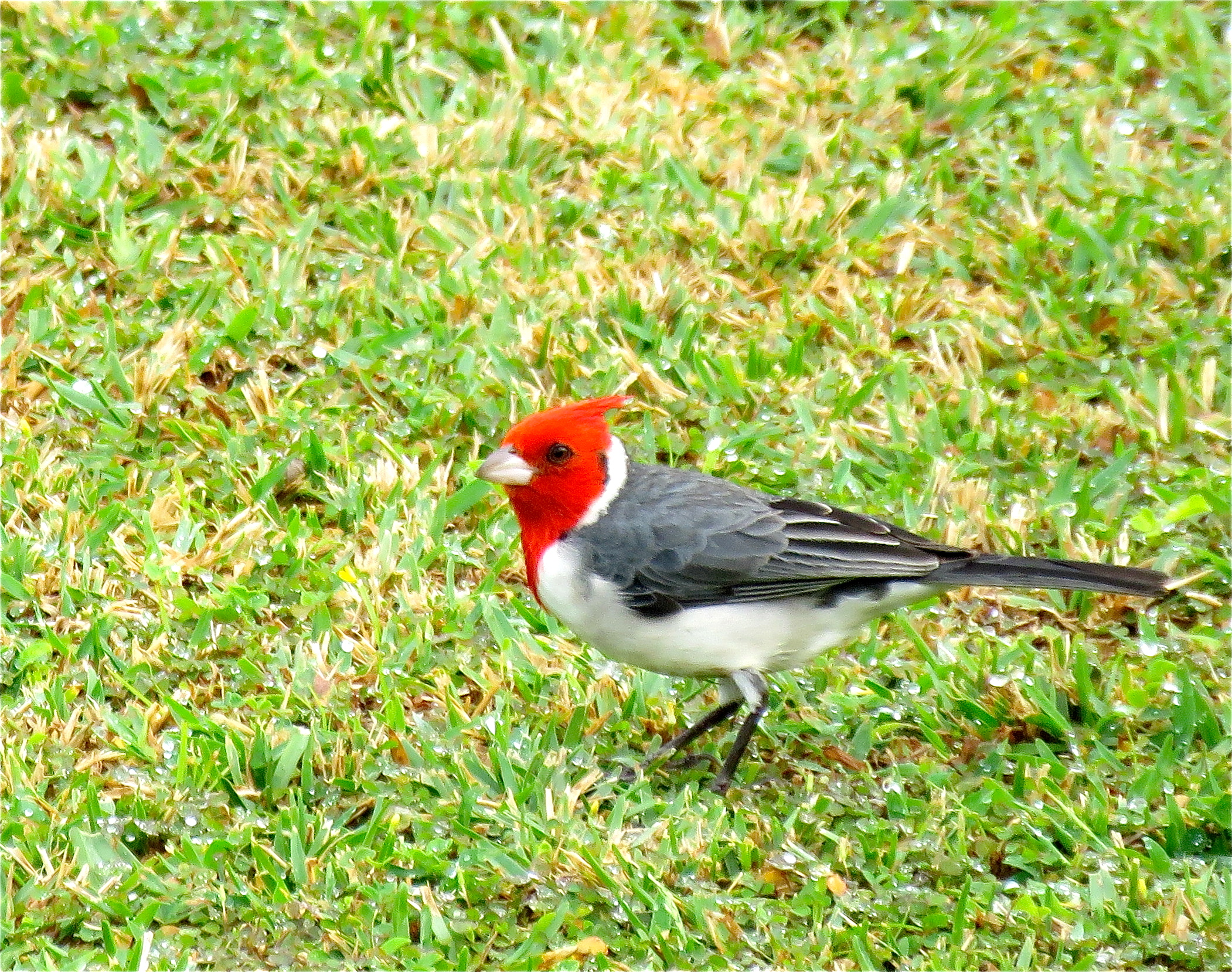
Red-crested Cardinal

So many birds are present here at our condo. We’ve seen the Red-crested Cardinal, Northern Cardinal, Pacific Golden Plover, Spotted Dove, Zebra Dove, Common Myna, Cattle Egret, Nene (Hawaiian Goose), Chestnut Munia, Nutmeg Mannikin, Moa (Red Junglefoul/Wild Chicken), Great Frigatebird, and last but certainly not least, the beautiful and graceful Laysan Albatross. The albatross ride the wind currents rising up the cliffs along the shoreline. Their long pointed wings allow them to move through the air barely having to beat their wings. Less than a mile from here, the albatross’ are laying and sitting on their eggs.

IMG_0146

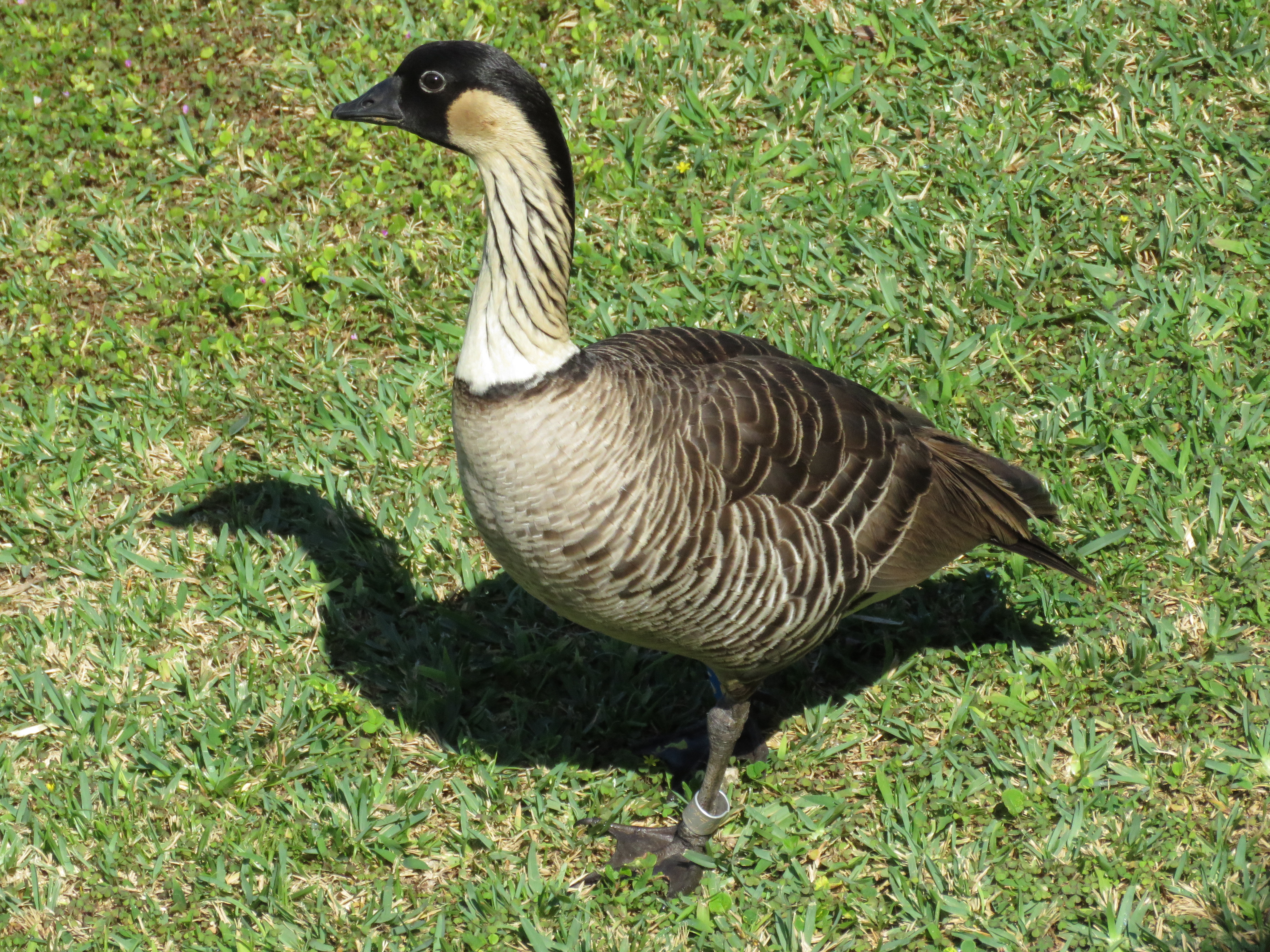
Ne Ne (Hawaiian Goose)

The Nene (pronounced like “nay nay”) is a silly and fun bird to watch. They almost always travel in pairs. In the mornings, they sometimes fly in groups of four or five and will land on the grass between the condo and the cliff. They make a big racket for a few minutes after they land, honking and squawking at each other with head down. On the Big Island and Maui, these birds are hard to find, but here they are plentiful, especially on golf courses and other grassy areas. These birds were nearly extinct on the Islands but they were reintroduced on Kauai years ago and have really become very plentiful here. They’re smaller than our Canada Geese back home and are quite beautiful to look at.

Na Pali, Take Two

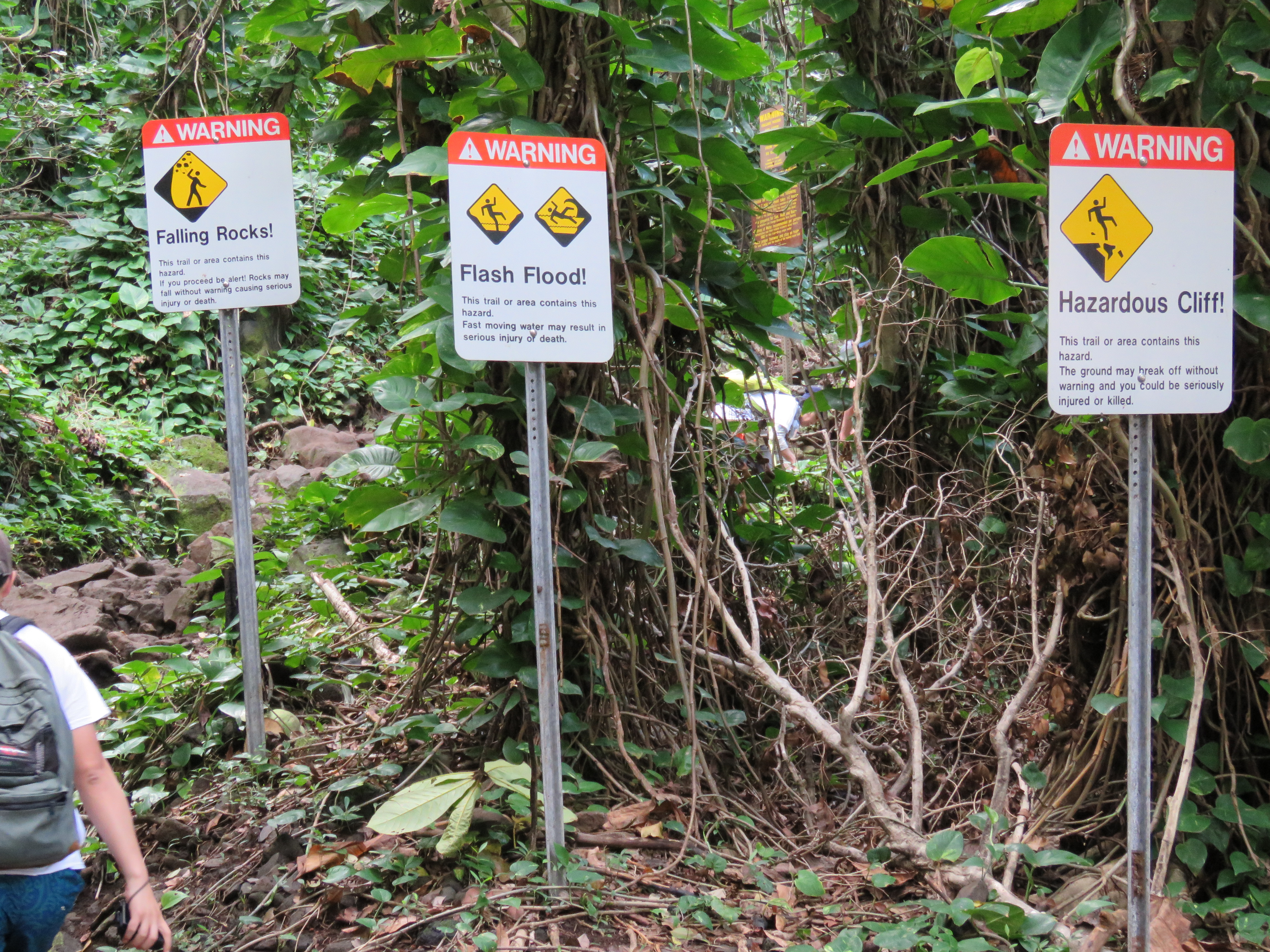
On Tuesday 1/14 we put on our hiking shoes, packed water and snacks, and headed to one of the world’s most beautiful and treacherous hikes – the Kalalau Trail. To get to the trailhead, we went through Hanalei on the Kuhio Highway (not really a highway by New York standards!) and followed the road along the bay and north coast until it ended, literally. You cannot circumnavigate Kauai; the reason is the range of mountains (formerly volcanoes) that are part of the Hono’Onapali Natural Reserve area and Na Pali Coast. A series of connected natural reserves encompass approximately 40- 50% of the Island of Kauai. Because Na Pali’s cliffs go directly into the ocean, there is only a foot trail that will take you part of the way down the northwestern coast. Kalalau is 11 miles long, one way, and ends at Kalalau Beach. Along the way, hikers experience the most amazingly beautiful views, waterfalls and beaches – but it comes with a price.

IMG_0123

Warning signs at Kalalau Trail head!


Backpacker magazine calls the Kalalau one of America’s 10 most dangerous hikes, and for good reason. The trail winds along the side of mountains with 300’ cliffs that dump into the ocean. If heights don’t have an effect on you, the fact that the trail is rocky, crumbly and slippery might give you pause. Nevertheless, signs at the entry to the trail don’t seem to stop people from venturing on in flip-flops and looking otherwise completely unprepared for this kind of trek. Despite all of the opportunity for Kalalau hikers to unwittingly jettison themselves off of a cliff, there have been very few known fatalities on the trail itself. The much larger danger is associated with going in the water from the few, small beaches along the way – especially in winter. The surf can be seriously treacherous at times and over 100 people have lost their lives from being pulled out to sea while trying to cool down after a hot day on the trail.

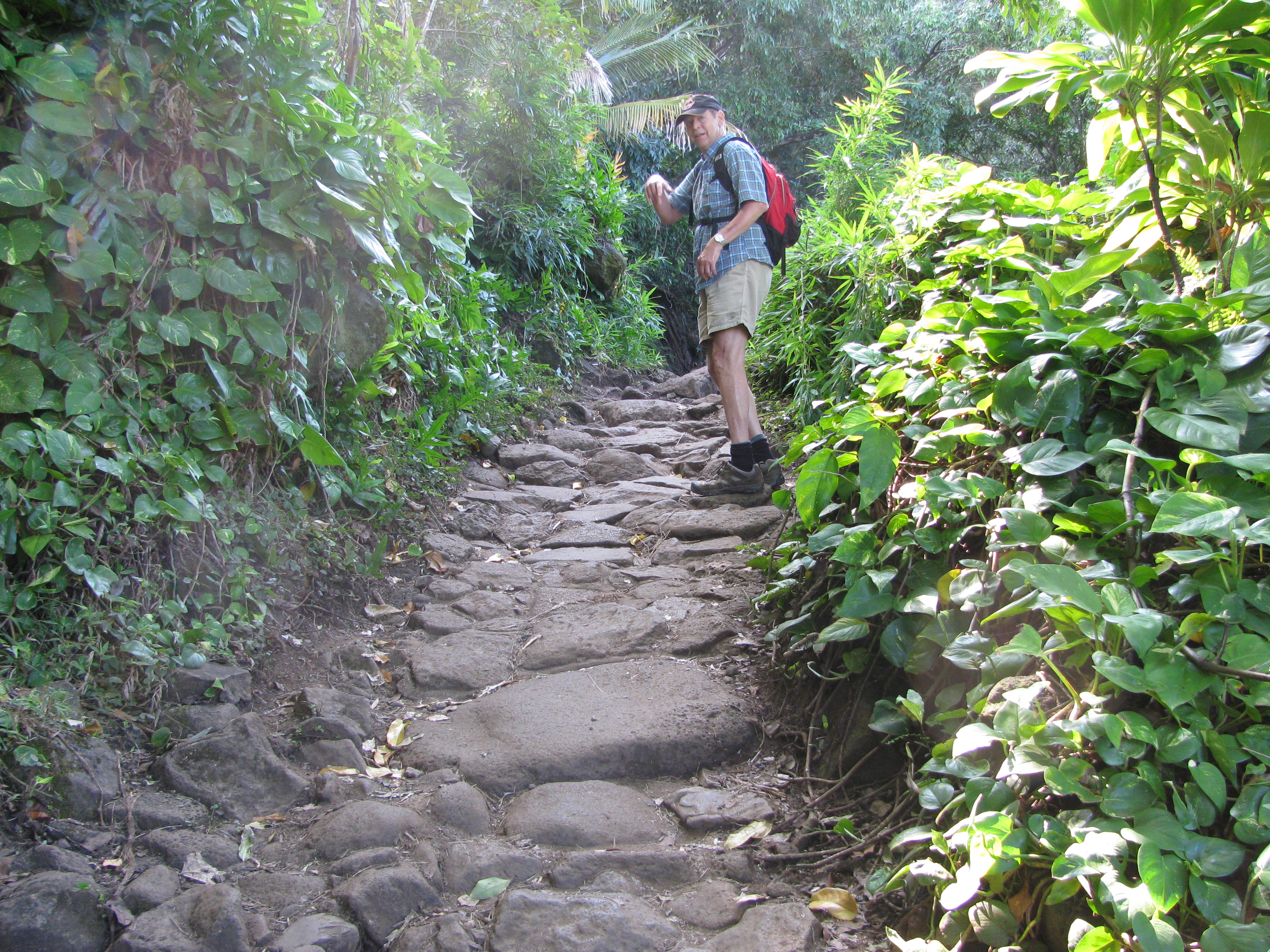
Despite all these warnings, we decided to make a short trek of it and just go the first 2 miles from Ke’e Beach to Hanakapi’ai Beach. I have to say, this is definitely the most rugged trail I have ever been on. Some of the trail is dirt, but a large portion of it is uneven, smooth rocks that get very slippery when wet, even with my aggressive-soled hiking shoes.

I had a few moments of thinking about my favorite trail back home – Treman State Park – which can get kind of squirrely in parts. I often find myself complaining about the lack of money that New York State has for maintaining its state parks. I found myself wishing for even a taste of something like the most wrangled trails back home! For me, every step had to be thought about carefully in order to avoid a twisted ankle, a slip, or a fall. To tell you the truth, it was kind of tiring and I had to take more than a few short breaks along the way.

IMG_1847

The Kalalau Trail


IMG_1863

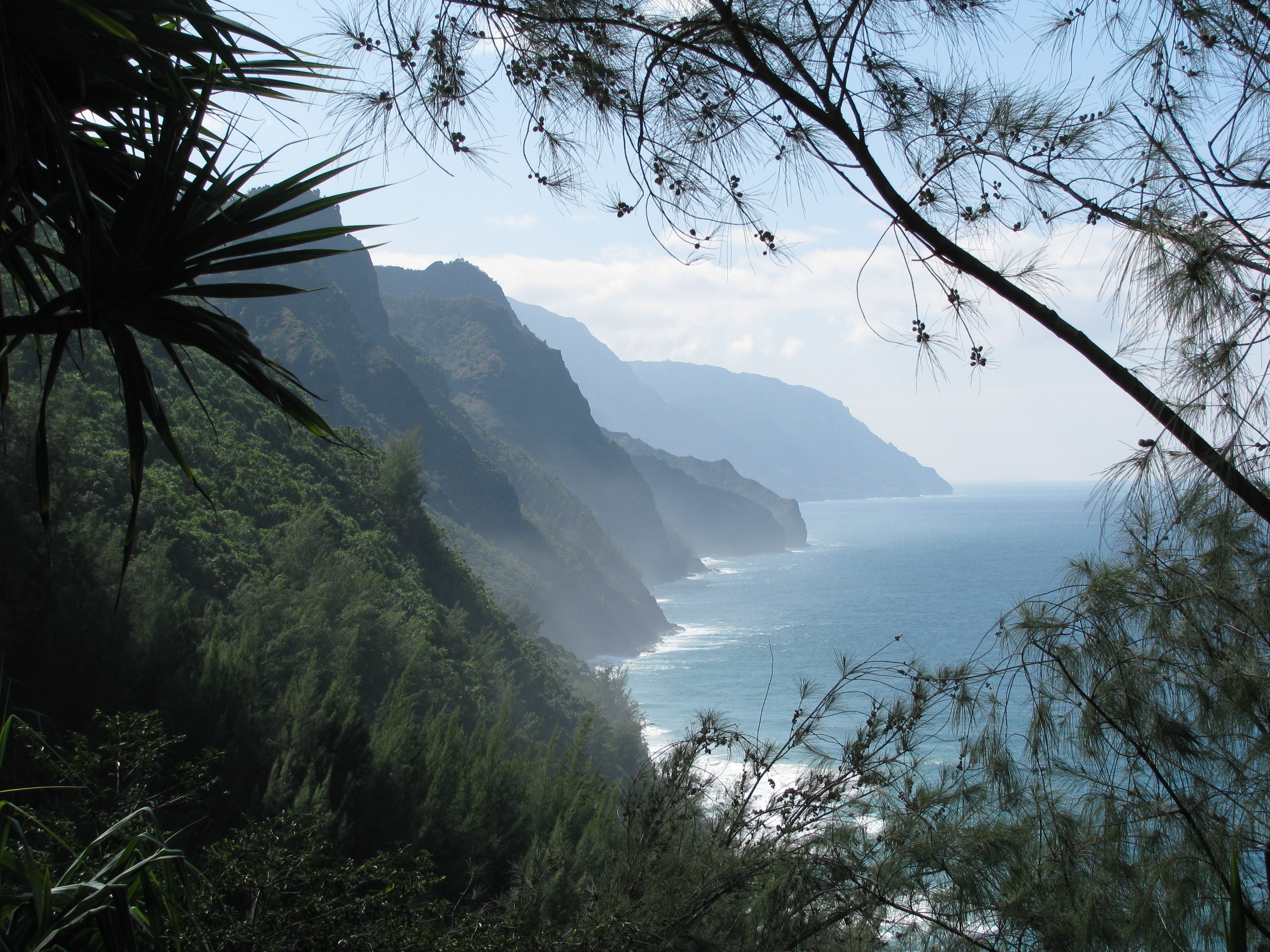
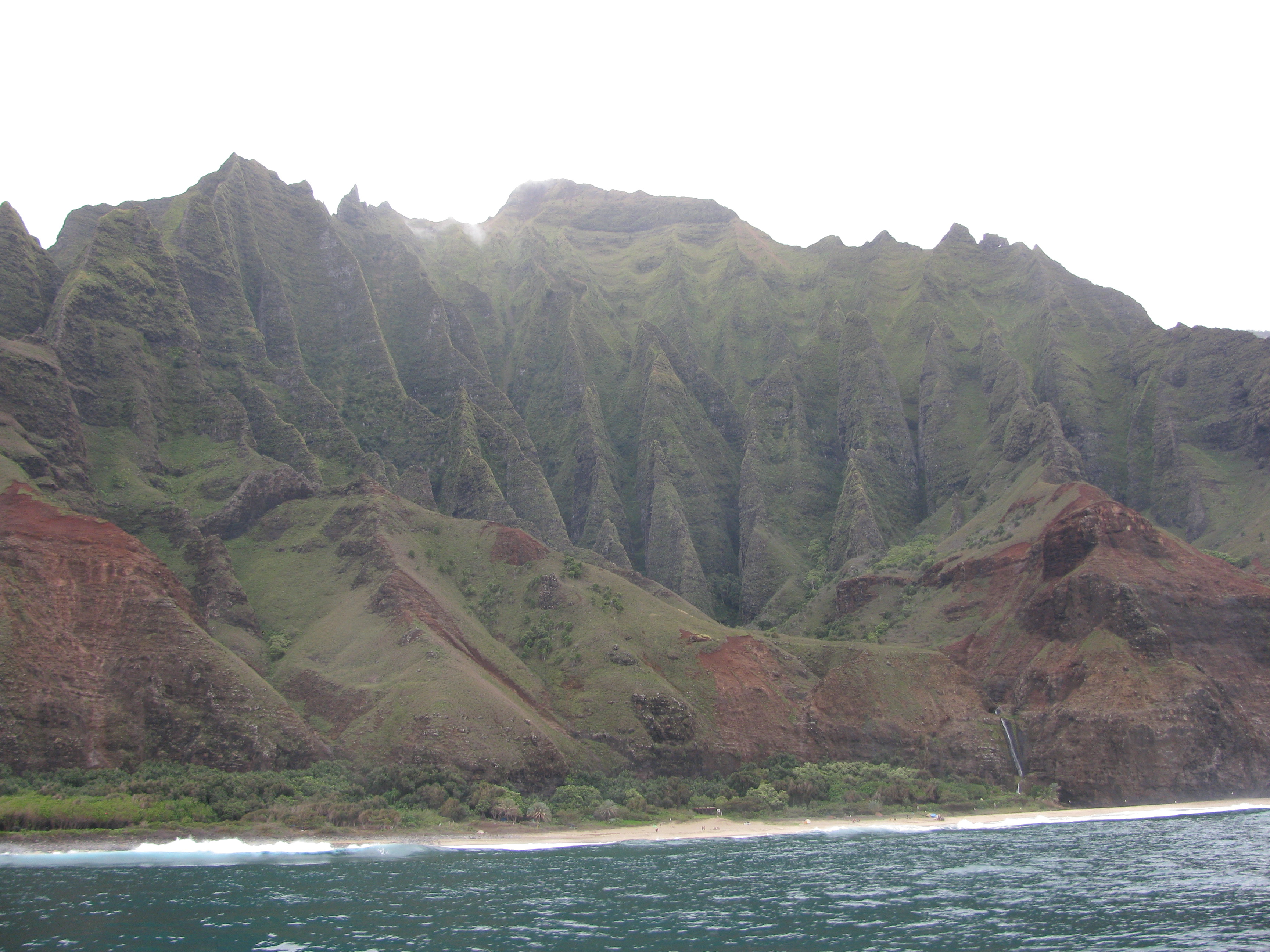
Beautiful Na Pali Coast


The views of the cliffs, the ocean and Ke’e Beach far below were so beautiful that it took my breath away time and again. I snapped a few pictures along the way but, just like when we took the catamaran cruise and viewed Na Pali from the water, photos just don’t give it justice. Looking up you see tall spires and peaks shooting up hundreds of feet. Looking down you see the terra cotta jagged cliffs that end on the rocky shore hundreds of feet below. From one vantage point, the trail widened and took a turn south and provided an incredible view down the Coast. On both the way out and back we found a few rocks to just sit and ponder this amazing place.

Hawaiians, who grew taro and other vegetables into the late 1800’s, inhabited several of the major valleys along the coast. They also created trails to link these settlements that are now part of the Kalalau. Since the early Hawaiians were expert sea navigators, they used canoes to access Na Pali’s remote valleys and to travel all over Polynesia.

So, some people were trekking along at a pretty good clip, and others, like me were taking it slower and with more caution. I noticed that it seemed the younger the hiker, the faster the pace! I guess getting older comes with a heightened weariness to falling. As well, being short has its positives and negatives in this kind of walk. Being 5’2”, I have a lower center of gravity, which adds to stability — and, I suppose I have less far to fall if I did. However, at 6’2”, Bill’s long legs definitely gave him an advantage on the steep drops and climbs. The whole time we were hiking, I felt very aware that there was a very steep and long drop just a foot or two off the narrow trail.

It seems like my confidence on the trail should have built over time, but instead, the further I went, the more anxious I got. A few tiny trips and slips on the rocks made my heart skip a beat and my adrenaline surge. At somewhere around ¾ of a mile, I realized that my shoulders were up somewhere around my ears and thought that perhaps I’d had enough for the day. Even though my body was perfectly capable of trekking on for several more miles, somehow my psyche was not. I remembered that this was not the first time I’ve had a reaction to high altitude and steep cliffs so I think it was good to call it a day.

As we headed back down to Ke’e Beach and revisited all of the beautiful vistas along the way, I reminded myself that we have time to come back on another day and go further on the trail. So I bid adieu to Na Pali and promised to come back for more of her splendor.

Na Pali Bound 1/5/15

On Monday 1/5/15 we took a 2.5 hour boat cruise with Holo Holo Charters on a 65’ catamaran and saw amazing sights. It left from Port Allen, about 10 miles west of Poipu along the southern coast of Kauai.

That day, the surf along the southern coast was calm and easy, great for whale watching, but the group was psyched to see the Na Pali Coast up the north-western side of the island which came with significantly more wind and waves. The captain gave the passengers the option to avoid the rough seas and stay closer to home but we chose to see the Na Pali Coast instead.

Just as the captain said, the waves were pretty easy at first and we were able to stop a few times to enjoy playful dolphins and breeching whales. Then the captain told us to hunker down in the boat for the 30-minute ride up the coast. He said the speed, wind and waves would be too much for anyone to stand or sit at the bow of the boat and he was right. We cut through the 8’ swells at about 20-25 mph directly into the wind. It was pretty exciting but, perhaps a bit too exciting for my stomach. Having experienced seasickness once before, I knew I needed to do something quickly before I turned completely green. At the encouragement of the crew, I moved to the center of the back of the boat, where they said I would get some fresher air and experience the least amount of boat movement. After focusing on my breathing and closing my eyes for a while, I felt my head clear and my stomach settle down. About 20 minutes later, Bill and I slowly watched the Na Pali Coast come into view.

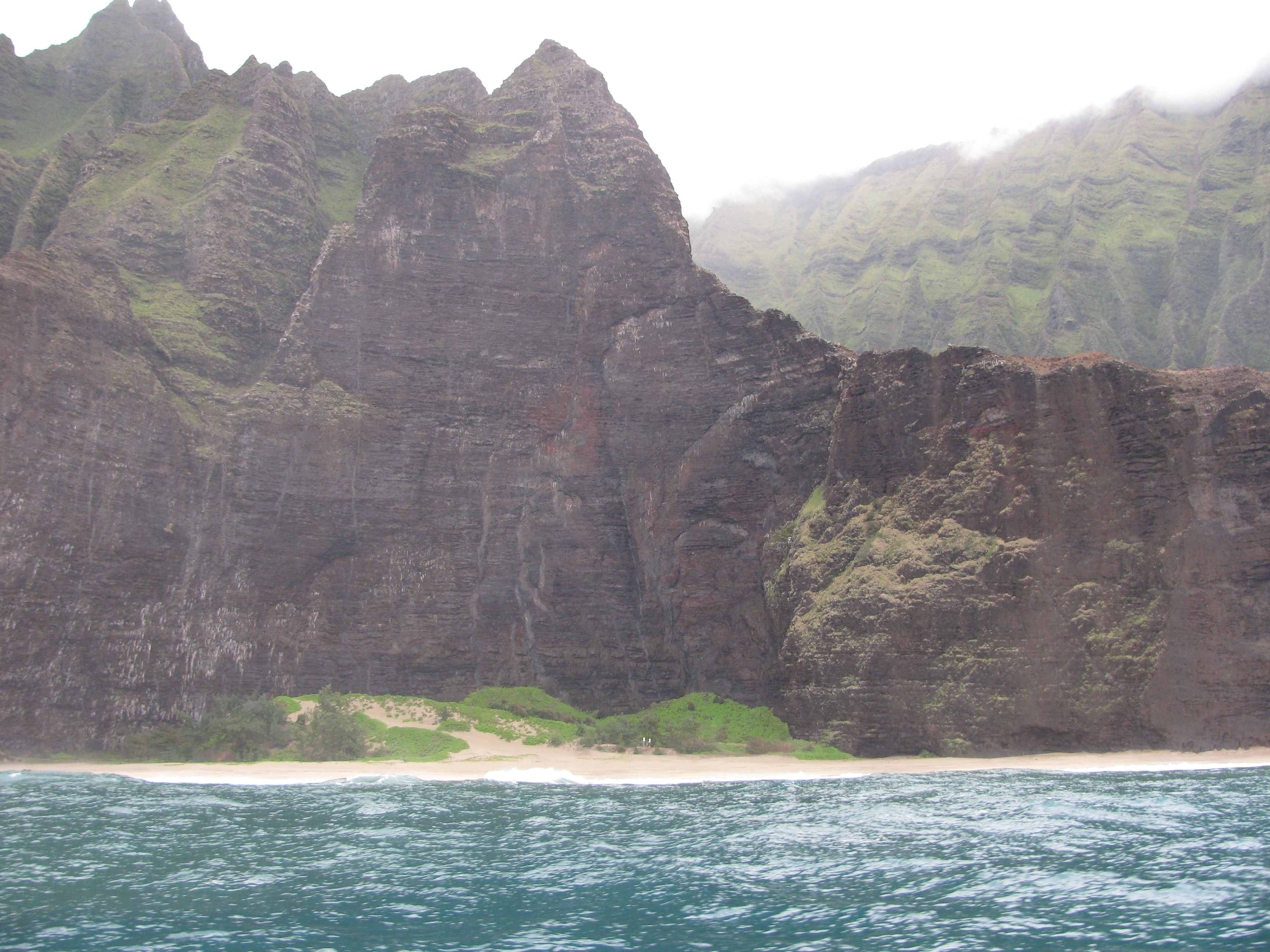
The Na Pali coast is one of those places where photos just don’t give justice to the real thing. I’ve had this experience many times before in nature. I’ve seen the most beautiful views of The Grand Canyon, Lake Placid, Robert Treman Park, Yellowstone and others. So many times I took photos to remember these beautiful places, but they don’t come close to the actual experience of being there. Kauai’s Na Pali Coast is one of those places you have to just experience. Nevertheless, I’ll include a few pictures here to give you a sense of this amazing place!

IMG_1763 IMG_1759

The island of Kauai, like the other Hawaiian Islands, was created by underwater volcanoes millions of years ago. Kauai is the oldest of the large islands in the chain and has the most rain, soil and plant life. What were once volcanoes now look like tall spires of green, lush mountains due to huge amounts of rainfall. Further inland, the wettest place on the planet is found on Mt. Wai’ale’ale at 5,075 feet with an average of 374 inches of rain per year. All that rain creates beautiful waterfalls and rivers that cut huge canyons in the porous rock, leaving tall fingers of cliffs that are nothing less than awe-inspiring. As you travel north up the Na Pali, the cliffs and peaks rise right out of the sea going from 1,000 to 4,000 feet. You see views that you don’t think could get any more beautiful and then comes another.

Along our trip, we viewed a few remote and beautiful beaches with a few hearty souls on them. This area of the island is so rugged, that the only way to get there is by hiking in or arriving by boat or helicopter. The 11-mile Kalalau Trail starts at the north coast of the island and winds its way along the cliffs to view remote waterfalls and beaches. The conditions are often dangerous, especially in winter when the big surf arrives. Many a hiker, boater and camper have lost their lives by not heeding warnings or being aware of quickly changing conditions.

Parts of many movies including,King Kong, Jurassic Park, South Pacific and Raiders of the Lost Ark were filmed here to take advantage of its dramatic gifts. The Na Pali Coast is the most beautiful place I have ever had the good fortune to enjoy on our beautiful planet.

And then the sky cleared

Our first day on Kauai was windy, overcast and rainy. It was a chilly day, for Kauai anyway, hovering in the upper 60s. I’m sure my friends and family back home are smirking as they read this because they’re experiencing temperatures in the 20s right now. However, this weather was a blessing because we were so out of it from traveling that we weren’t able to do much anyway. A warm sunny day would have lured us out of our room sooner to do hiking or paddling but I think we really needed to just recover. We did make it to a grocery store to get breakfast food, snacks and beverages though. While we were out, we also drove west along the coast to check out a blowhole at the Spouting Horn site. Blowholes occur sporadically around the islands where ocean water is forced into ancient lava tubes and shoots up into the air with a big “whoosh” sound. They’re pretty cool to watch and can send the water up 30 feet sometimes. It was a great day to see Spouting Horn because the ocean was rough with big crashing waves.

While driving towards Spouting Horn, the sight of OC6s (6 person outrigger canoes) caught our eye. We turned the car around and headed back to a small park and harbor where the local outrigger canoe club was quickly securing their canoes from the wind. The canoes were being stored for a few months for the winter without their amas and iakos attached. This leaves the canoes in a vulnerable state; evidently it was windy enough that one of them rolled half way across the park. We (mostly Bill) helped them get their boat moved and secured. It was nice to meet some fellow paddlers. This time of year in Hawaii is considered “OC1 season” where the temperature is a bit cooler and the waves and wind get intense at times. The outrigger clubs take a break with their OC6’s for a few months and those who have the means and ambition, focus on their OC1 skills.

We woke the next day to puffy clouds, blue sky and the sun. After being under Ithaca’s cold and grey skies, seeing the sun felt a bit surreal but we could feel the fog lifting in our bodies and minds. On Saturday, we explored the grounds of the hotel and found that the Grand Hyatt Kauai definitely lives up to its name. The grounds are beautifully manicured with flowers, palm trees and flowing water. It’s much like the other places we’ve stayed in Hawaii for the HICSS conferences. Gorgeous views, lots of fun water slides and pools, restaurants and shops. It’s like a small, self-contained village, only it’s not. These places are built to be pleasing and comfortable but, of course, they all have a Disney-like, non-reality feel to them. Nevertheless, why look a gift horse in the mouth, especially when someone else is paying for it!

Since there aren’t places to rent OC1s around here, we decided to rent the sit-on-top kayaks and paddle around (and around) the hotel’s small lagoon to move our bodies a bit. It wasn’t much of a work out but we had fun. After that, we went for a walk eastward up the beach to a place called Shipwreck Point, which gave gorgeous views of the blue crashing waves and dramatic lava cliffs.

Later that day, we took a tour of the Allerton and McBryde Gardens which are part of the National Tropical Botanical Gardens http://www.ntbg.org. This was a lot of fun and very interesting. The Gardens lie in the Lawa’i Valley and was first transformed by the Hawaiian Queen Emma. Later on, Allerton Garden was developed by noted landscape artist Robert Allerton and his partner, John Gregg, architect. With five “rooms” consisting entirely of trees, exotic plants, grasses, statues, water features and other structures, it is itself art. Instead of painting his garden canvas with colors from flowers, he painted with texture, hue, movement and sound, giving the observer the experience of being in and part of his artwork.

Landed on the Garden Island

Our first day of 2015 was another day of travel and transition but we finally landed at the hotel in Poipu on the Garden Island of Kauai. Before we left yesterday, we were hoping to take in some sights in Honolulu but found that the beautiful Iolani Palace was closed for the holiday, so we had the cab driver take us to a place that we knew would be open — the mall. Now, this was certainly not our first choice of places to visit in the wonderful state of Hawaii, but we only had about an hour to shoot and we needed a few things that would probably be difficult to locate on Kauai, so, we shopped. The Ala Moana mall was pretty upscale and located near the Japanese section of the city. It was abound with Asian people and nearly everything was translated into Japanese. Bill said that, having traveled to Japan, the whole place had a Japanese feel to its design.

Our flight from Honolulu to Lihue was pretty uneventful except for the joy of feeding a few spotted and zebra doves in the airport while waiting for our flight. Like most buildings in Hawaii, parts of the airport were open air and others weren’t, so birds are a common sight everywhere you go. For us northerners, the first time you see a feathered friend in a building is a bit startling but it becomes commonplace pretty quickly.

After renting our car and seeing a beautiful rainbow, we enjoyed seeing more birds along the way to the hotel including many wild chickens and several cattle egrets. The hotel is a huge place and, gratefully, our room is as far away from the commotion of hotel life as it can get. We’re at the end of a very long hallway near a natural area and the public beach. This will be a great place to watch birds, look at the Pacific, and listen to the waves.

I went to bed at about 8:30 last night (still adjusting to the time change) and was awakened at about 12:30 to the sound of jungle foul doing their “cock a doodle doo” call. I slept well but woke up several times and heard them continuing their wooings. Evidently, the critters call out all night long, presumably trying to attract a mate or marking their territory. I’m glad they didn’t keep me awake. The sound of the waves crashing on the beach was truly wonderful and lulled me back to sleep each time I woke.

New Year’s in Oahu

Getting to the plane in New York was a bit hairy, but we made it to the gate just as they were starting to board. We enjoyed our experience with Hawaiian Airlines due to the extra leg room for Bill (who is 6’2″) and because they fed us actual food for lunch and fresh fruit as a snack. Flying hawaiian is like flying used to be, except better!

We arrived in Oahu at about 3:30 and went straight to the Honolulu Airport Hotel. On the way, we met a family from Australia with two small girls. They had been visiting his family in NY and VT and were heading home. We easily started up a conversation with them about surfing, outrigger paddling and standup paddle boarding. They were really sweet and even gave us their contact info so that we could call them when we’re in Sydney. The guy even gave us a book that he wrote and I’m looking forward to checking it out.

Wearing my NY winter clothing, I expected to be severely overheated upon our arrival but we were pleasantly surprised by 72 degrees and low humidity. We grabbed some dinner in the hotel restaurant because we were too tired to venture any further than that. The food was good but I started to really fade out by the end of the meal. I crashed at about 6:30 and only knew it was new year’s by the sound of fireworks at midnight.

So we are five hours difference in time here. This means that it is 4:27am here, we are wide awake and ready to eat breakfast but the restaurant in the hotel doesn’t open for another hour and a half! Time changes are always a little jarring to the system but we’ll get over it soon enough.

I’m looking forward to seeing the sun and greenery here today. We have a few hours to explore Oahu before our flight early this afternoon to Kauai. Maybe we’ll find a botanical garden to take in. Can’t wait to see some birds!

A Happy and Healthy New Year to all.

Fun in Fort Lauderdale October 2014

Our trip to Fort Lauderdale was fun and relaxing. We paddled three times with the Lanakila Iki Outrigger Canoe Club, found several nice restaurants, took in some local “old Florida” history, shopped and enjoyed a beautiful beach. We stayed at the Westin Beach Resort, right on Fort Lauderdale Beach and down the street from a host of restaurants and bars.

Intercoastal Waterway

The New River through downtown Fort Lauderdale

All of the restaurants along the beach had outdoor and indoor seating. Since the weather was so nice nearly the whole time of our visit, we enjoyed eating outdoors for all of our lunches and dinners. Thankfully, all of the restaurants were amenable to Bill and me sharing meals. The amount of food you get these days in restaurants is astronomical and since we’re both trying to reduce our waistlines, we tend to share meals when we can.

On our first day, we stumbled upon the Casablanca Cafe where we enjoyed several great fish meals, tender beef kabobs and fresh salads with a Mediterranean theme. We noticed that the wait staff was exceptional and the atmosphere was much quieter than most of the raucous eateries on the beach strip.

We dined two times at the more sophisticated Steak 954 restaurant, also on the beach. Our first visit, we really enjoyed the shelled lobster over risotto. We rarely order lobster so this was a treat. Not the cheapest item on the menu but it was worth it because it was so good and sharing it made the price easier to swallow. We enjoyed great wait staff during both visits and enjoyed watching the waves and water as we ate. For our second visit we shared our whole meal again. The waiter was nice enough to even split the chopped salad, which was excellent and the 8oz. filet mignon. They gave us a huge plate of great tasting French fries (thankfully, we didn’t finish them!), and their amazing smoked cauliflower and kale. The veggies were perfectly sautéed with onion and had a subtle smokiness. Even after sharing the food, we were more than satiated at the end of the meal.

Since our room had a refrigerator, we were able to do our usual breakfast thing which consists of me making a smoothie with my portable, one-serving blender using ice, a Naked fruit smoothie drink, rice milk, a banana, and my protein powder/ground flax seed/sunflower seed mixture. Bill purchased yogurt parfaits along with his morning coffee from the Starbucks downstairs.

On one of our jaunts we took a taxi to the Whole Foods store about 4 miles away and got some bananas, rice milk, cereal, juice, etc. to tide us for snacks. Near the Whole Foods was a recommended fast-food-ish restaurant, Pei Wei, which is a sister restaurant of PF Chang’s. The local who recommended it pronounced it “Pee Wee” but our Chinese friend Jubo said it was pronounced more like “Pay Way.” Bill got lettuce wraps and spring rolls and I got a sesame chicken dish which were all very tasty. The food is served deli-style where you order, grab your drinks and sit down with a number on your table. The food was delivered quickly and the staff was more than friendly.

During our stay, we enjoyed three fun and exciting paddles with the Lanakila Iki Outrigger Canoe Club on the Atlantic and the Intercoastal Waterway. See the Outrigger Paddling page for a more complete description.

Neither of us were very familiar with Fort Lauderdale but we were aware of its reputation as a party destination for college students. I have to say that it’s truly a beautiful and exciting city but also one of the loudest cities I’ve ever visited. It ranked right up there with New York City in terms of speed, sound and activity – just on a smaller scale. Nearly every restaurant and store had hard driving, almost frantic music playing. The sounds from the main strip (SR A1A) seemed at times to be unrelenting. Given that it is a major strip, it seemed that in the evening hours most of the vehicles were going up and down the strip more with the intention to be seen rather than to actually get somewhere. Particularly motorcycles without mufflers were very popular as well as beefed up cars and trucks. I guess our distaste of the noise level is a sign that we’re growing older!

The pounding music extended into the shopping district in downtown Fort Lauderdale on Las Olas Boulevard. The stores were very high end and had clothing that, well let’s just say, didn’t catch my fancy. Perhaps if I needed clothes to wear on my 150’ yacht while entertaining guests, holding my tiny lap dog, and toting a martini, then this would be the place to shop! I did mange to find the Fresh Produce clothing store (one of my favorites), which had much calmer music and atmosphere. This gave me a good excuse to linger a bit longer.

Las Olas’ restaurants all looked wonderful, some more expensive than others but all on the high end. Just outside the strip we found an excellent Mexican restaurant called Rocco’s. It was a bit loud but we asked for a table on the porch area, which reduced the bar noise a bit. This was my first time having guacamole made to order at our table and it was great! The only problem was that we ate so much of the guac and chips that we could barely eat the tacos we ordered.

Bill and I took a boat tour on the river and really enjoyed the sights. There were a few green patches where we saw cattle and snowy egrets along the way but mostly we saw huge mansions of the rich and somewhat famous and their massive yachts.

The Water Taxi

The Water Taxi

On the way back from downtown one day, I took the water taxi back to the hotel and really enjoyed the sights and lightly narrated tour. For $22 you can ride the taxi all day. It goes west, up the New River into town and then goes north and south up the Inter-coastal Waterway for several miles.

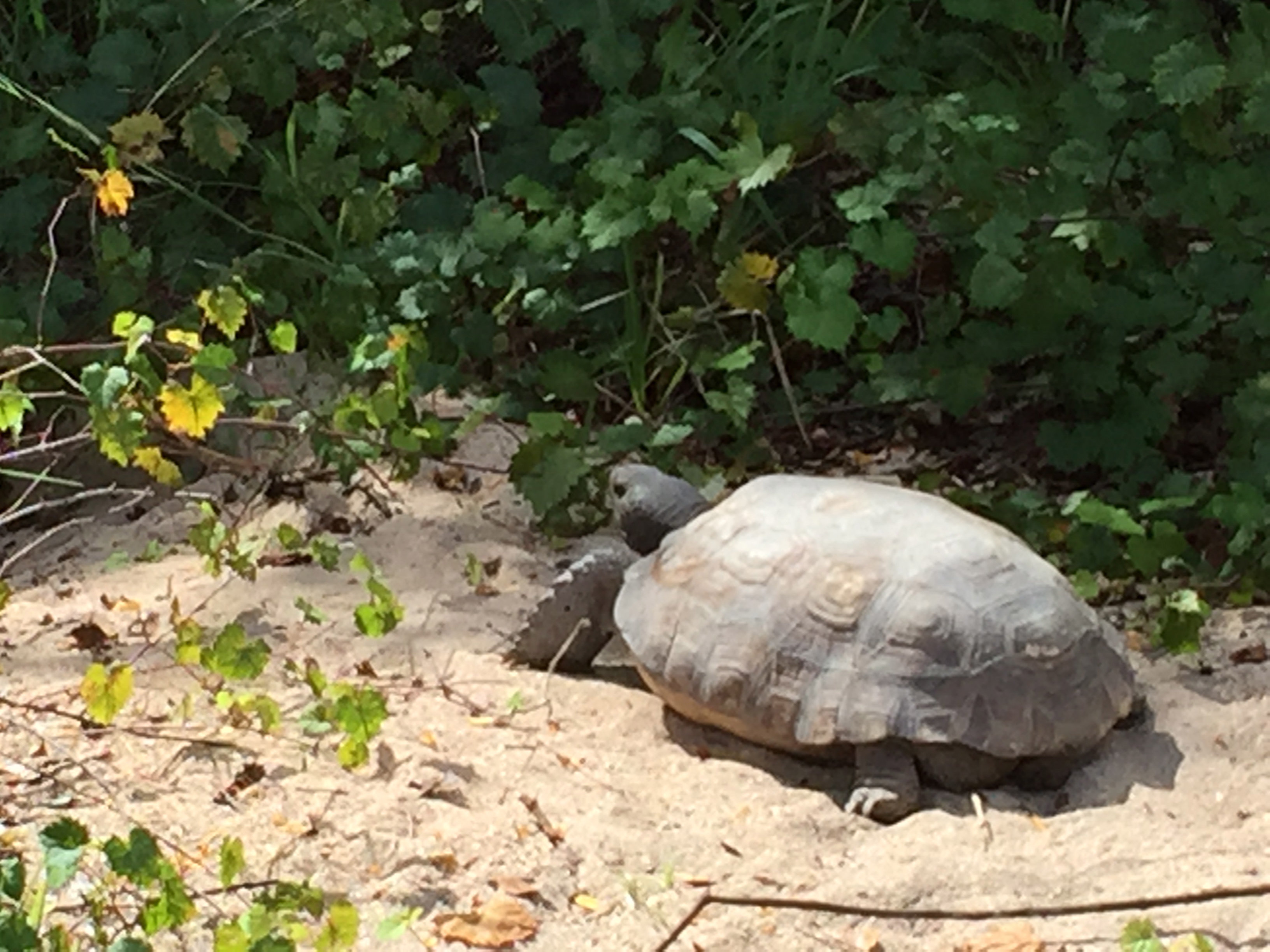
Gopher Turtle in Hugh Taylor Birch State Park

Gopher Turtle in Hugh Taylor Birch State Park

Bill and I enjoyed tooling around the Hugh Taylor Birch State Park on bicycles one day. The Park was just a few blocks north of the hotel on SR A1A along the beach. This is one of the few natural areas left along the very developed stretch between Miami and West Palm Beaches. We enjoyed seeing an osprey, mockingbirds, cardinals, blue jays and a gopher turtle as we got a sense of the way tropical south Florida was before all of the development. We intended to make it back to the park to rent a canoe and paddle up the lagoon but ran out of time this visit.

IMG_0216

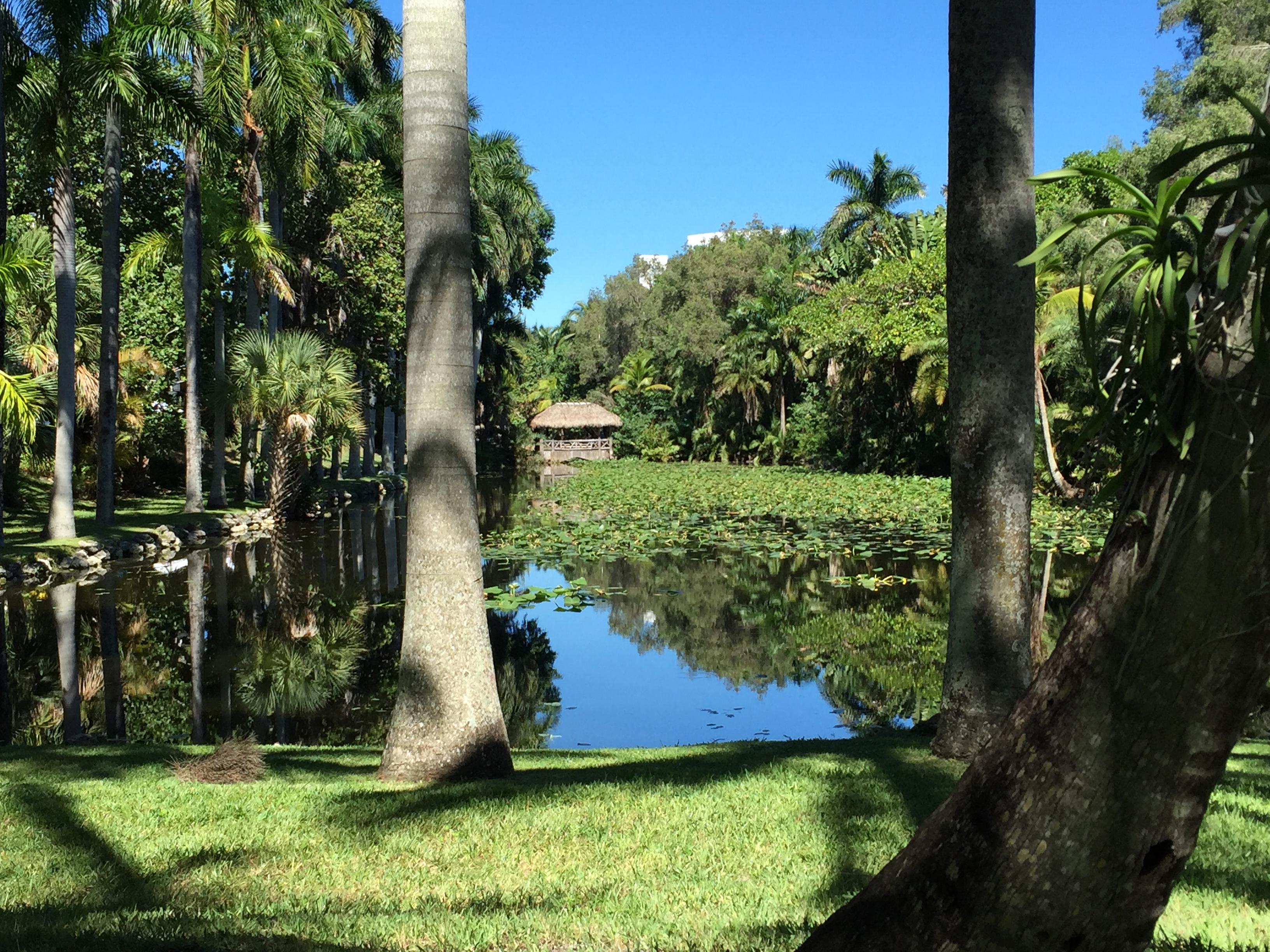
Gardens at Bonnet House estate

IMG_0214

Foyer at Bonnet House

While Bill was at his conference, I had the chance to get a taste of “Old Florida” by visiting the Bonnet House estate. This is a piece of property that was given to The Florida Trust by the very wealthy Bartlett family. Located just south of the Birch State Park, it was an understated house amidst several acres of natural areas and gardens. The Bartletts were both artists so the house was filled with whimsy and creativity. Walls and ceilings expertly depicted different motifs, animals and scenes of far away places. Frederick Bartlett’s studio had grand scale north-facing windows and was covered with his beautiful work. Since this was one of ten houses owned by the Bartletts, they used this one mostly for entertaining friends and family. The area formerly used for guest bedrooms now houses a large collection of Evelyn Bartlett’s bright and somewhat whimsical paintings. The property is home to three Costa Rican Squirrel Monkeys – unfortunately, I didn’t spot one during my visit. Supposedly during the 1950s there were over 50 of them there but their numbers have dwindled for reasons I’m not sure of.

We hung out in the warm waters several times and even snorkeled a little but didn’t find much to look at. It’s so rare that I can actually get into the Atlantic so I was really pleased that the water temperature was about 80 degrees – too warm for a lot of avid swimmers. From shore I was able to see schools of fish go by as well as pelicans flying overhead.

All in all, we found Fort Lauderdale to be a fun, clean and vibrant city with a thriving downtown – something so many American cities are lacking these days. The city had a lot more to offer than we had time to explore so we would like to visit again someday. A future visit might entail taking more advantage of the water taxi, more paddling with the outrigger club, paddling in the Hugh Taylor Birch State Park, exploring the park to the south that we didn’t get to visit, renting bicycles to get around town, go snorkeling, taking a tour of the Everglades, taking in a few museums and boogie boarding.